Child Protection in Ghana: What the UNICEF Data Shows About the North
UNICEF’s report Fulfilling the Commitment to Child Protection in Ghana brings together the national data on birth registration, children living without parental care, violence, child labour, child marriage, female genital mutilation, online protection and child poverty. It was published in June 2021, and most of its figures come from the Multiple Indicator Cluster Survey of 2017-2018. Its foreword says violations of children’s rights in Ghana can be “hidden in plain sight”. Data is how you see them.
The report has no chapter on trafficking. It does not need one. Almost every risk factor traffickers rely on is measured in it.
The national picture
The headline figures are stark:
- One in five children aged 5 to 17 is in child labour, and one in five works in hazardous conditions.
- One in five young women was married before 18.
- 94 per cent of children aged 1 to 14 experienced violent discipline at home in the past month. Close to one in five experienced severe physical punishment.
- Over one in four children under five - 1.2 million - have not had their births registered.
- Three in four children are multidimensionally poor, deprived in at least three areas of their lives at once.
The North carries the heaviest load
The national averages hide the gap between regions. The report uses Ghana’s ten regions as they were before 2019, so “Northern” here includes what are now the Savannah and North East regions.
Child poverty is the clearest example. In Greater Accra, 4 per cent of children live in monetary poverty. In the Northern region it is 67 per cent, in Upper East 58 per cent and in Upper West 78 per cent.
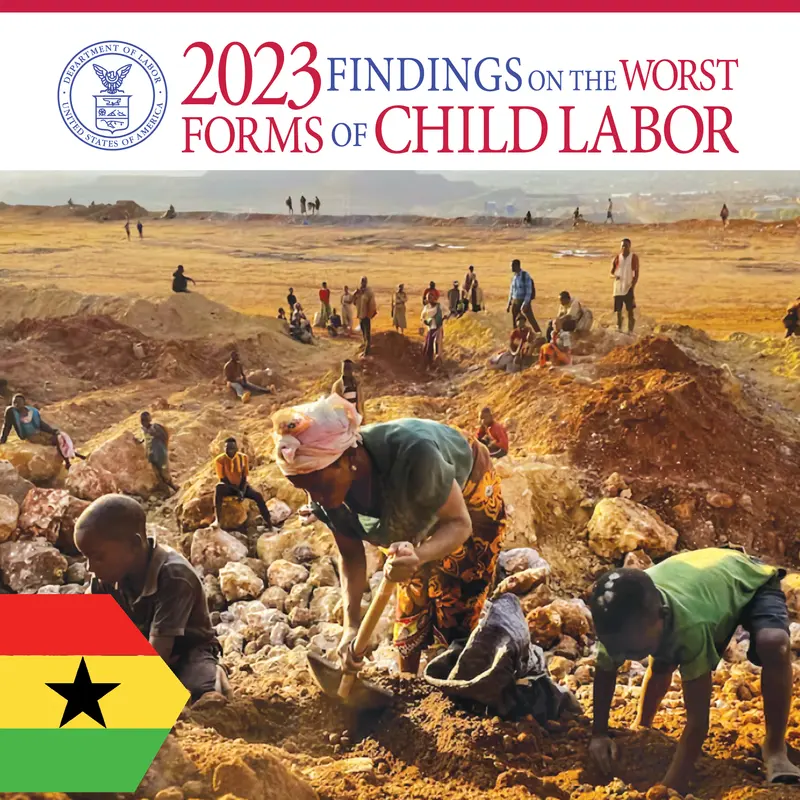
Child labour follows the same line. The Northern region has the highest rate in the country, at 42 per cent of children aged 5 to 17. Greater Accra has 7 per cent. Most working children are unpaid family workers in agriculture, forestry and fishing.
Child marriage has fallen across Ghana, from 34 per cent in 1993 to 19 per cent in 2018. The regions have not moved together. In Greater Accra it fell from 31 per cent to 8 per cent between 1983 and 2018. In the Northern region it went from 31 per cent to 28 per cent. The report lists the North among the regions that have made little progress.
These are the conditions we work in. Poverty, children working long hours for the family and girls married young are not separate problems. A family under that pressure is the family a recruiter approaches with an offer of work somewhere else. We set out how that plays out in our guide to child trafficking in Ghana.
Children online
The report draws on a 2017 national survey of 2,000 children aged 9 to 17. One in three used the internet at least every week, and the average child started at 12. Four in ten had looked for new friends or contacts online. Nearly one in five had sent a photo or video of themselves to someone they had never met, and one in five had met someone in person whom they first got to know online.
Reports of child sexual abuse material uploaded from Ghana rose from 750 in 2016 to 13,178 in 2020, according to figures from the US National Center for Missing and Exploited Children cited in the report.
Ghana’s response has been real. The Cybersecurity Act 2020 criminalises online grooming, sextortion and child sexual abuse material, and the Ghana Police Service now has a child protection digital forensic lab. But the survey is from 2017, and phones have become cheaper and more common since. What we found in Tamale - girls trading sex for mobile data and receiving explicit images from adult men - is in our article From Tamale to Madrid. The TikTok to OnlyFans pipeline shows what reaches them now.
Norms, not only poverty
Some of the most important figures in the report are about attitudes. Nearly 60 per cent of mothers believe physical punishment is necessary to raise a child, with little difference by wealth, education or age. Adolescent girls aged 15 to 19 are more likely than any other age group to say a husband is justified in beating his wife - 37 per cent of them, against 22 per cent of boys the same age.
The report’s conclusion names adolescent girls as the most vulnerable group in Ghana, because of sociocultural attitudes and gender discrimination. A girl who has grown up believing violence is normal, and that her own wishes come second, is less likely to recognise exploitation when it is offered as an opportunity.
Prevention works
The report is not only a list of harms. It shows real change. Female genital mutilation among girls aged 15 to 19 in Upper East fell from 37 per cent in 1988 to 1 per cent in 2018. Child marriage nationally has nearly halved since the early 1980s. The report credits political commitment, public support and investment, particularly in girls’ education.
That matters for trafficking. Harmful practices that were common a generation ago have fallen fast where communities changed what they accepted. Trafficking prevention works on the same principle.
What UNICEF asks for, and where we fit
The report ends with three pathways to change: more money for district assemblies, a stronger social welfare and justice workforce, and better understanding of violence and abuse within families, including sexual violence online, with communities encouraged to prevent it.
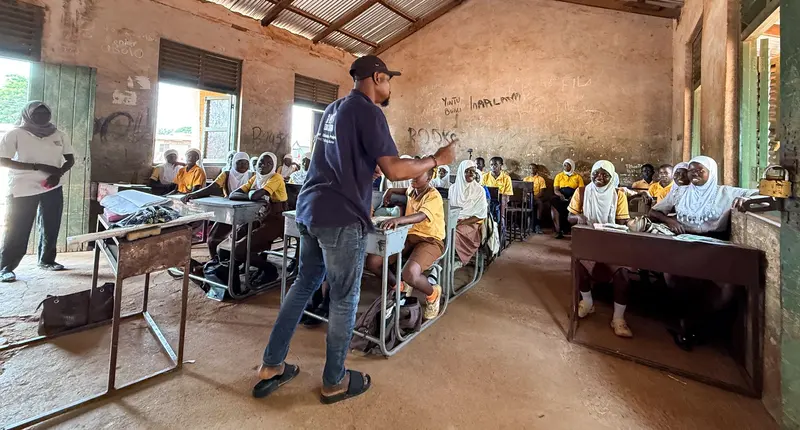
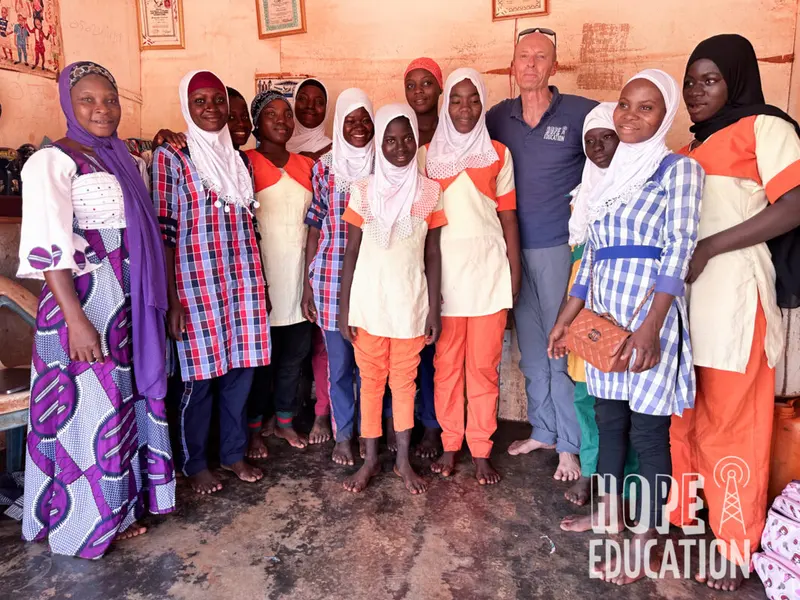
The first two are for government. The third is where we work. Our SMART Schools Program teaches Junior High School students how recruitment works, online and offline, and Module 3 covers digital safety. Our SOMA Girls’ Empowerment Program works with girls at the point the report identifies as most vulnerable. Both are delivered in Tamale, in the region where the data says the need is greatest.
The UNICEF data is now several years old, and the report itself says progress has been too slow and uneven. New data will show how far things have moved. The 2026 Trafficking in Persons Report shows what enforcement has achieved since. What the UNICEF figures make clear is where prevention has to start: with children in the North, before the offer arrives.
Stay in touch
Join our mailing list
Occasional updates on our work in Northern Ghana, straight to your inbox.