Child Trafficking in Ghana: Causes, Where It Happens and What Prevents It
Most child trafficking in Ghana does not start with a stranger. It starts at home, with a relative, a broker or a promise of an apprenticeship, and it moves children into fishing, farming, mining, domestic work and the streets. In October 2026 Ghana moved up to Tier 1 in the US Trafficking in Persons Report. That is real progress in prosecutions. It has not yet changed the conditions that send children into exploitation, and those conditions are strongest in northern Ghana, where we work.
Key facts
- Ghana moved up to Tier 1 in the US 2026 Trafficking in Persons Report, with 2,331 trafficking victims identified in 2025.
- In Lake Volta fishing communities, 37.7% of children surveyed were likely trafficked (IJM, 2023).
- More than 1.1 million children aged 5-17 in Ghana are in work (Ghana Statistical Service, 2023).
- Under Ghana’s law, a parent’s consent is no defence to trafficking a child.
What counts as child trafficking in Ghana
Ghana’s Human Trafficking Act, 2005 (Act 694), amended in 2009, defines trafficking as recruiting, moving, harbouring or receiving a person for the purpose of exploitation. For a child, anyone under 18, the law goes further. Section 1(4) says the consent of the child, the parents or the guardian cannot be used as a defence, whether or not there was fraud, deception or abuse of power. Section 3 makes providing a child for trafficking an offence even where the person is a parent. The minimum sentence is five years in prison.
Child trafficking and child labour overlap but are not the same thing. Under the Children’s Act, 1998 (Act 560), the minimum age for work is 15 and for hazardous work 18. A child working illegally is in child labour (child labor in US reports). A child moved, handed over or held for that work is trafficked. On Lake Volta, in cocoa and in domestic service, the two often run together, which is one reason both are under-reported.
How many children are affected
No one knows the full number, and anyone who quotes one figure for “child trafficking in Ghana” should be treated with caution. The best evidence comes in pieces:
- The 2026 Trafficking in Persons Report records 2,331 trafficking victims identified in 2025, 1,302 of them in labour trafficking. It does not say how many were children.
- An International Justice Mission study published in 2023 surveyed 1,286 children in fishing communities in three Lake Volta districts. It found 37.7% were likely trafficked and a further 45.1% were in exploitative child labour.
- The Ghana Statistical Service counted more than 1.1 million children aged 5-17 in work in 2023, 458,443 of them not in school.
- In cocoa-growing areas, NORC’s 2020 report estimated about 770,000 children in child labour in cocoa production in Ghana.
These surveys measure different things with different age bands. They cannot be added together or read as a trend. What they show together is scale, and a protection system that identifies a small fraction of the children inside it.
Where children are trafficked and for what
The 2026 Trafficking in Persons Report lists the sectors plainly: traffickers exploit Ghanaian children in forced labour in inland and coastal fishing, domestic service, street hawking, begging, portering, artisanal gold mining, quarrying, herding and agriculture. Children from Ghana and other West African countries are exploited in cocoa.
Fishing on Lake Volta. The best documented. Boys, some very young, are sent to work on boats in the lake’s fishing economy. Girls in the same communities process and smoke fish, do domestic work, and are exposed to sexual abuse and exploitation. Our earlier piece on sex for fish looks at the coastal side of the same pattern.
Cocoa, farming and herding. Children work on family and hired farms, sometimes far from home, and the line between helping the family and forced labour is often crossed without anyone naming it.
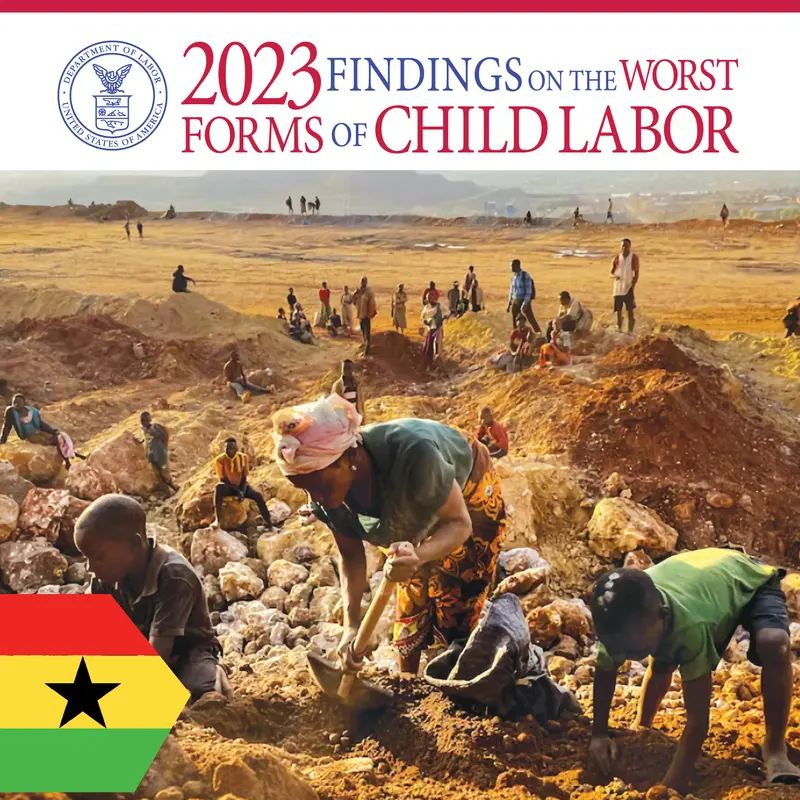
Mining and quarrying. Artisanal gold mining (galamsey) draws children into dangerous pits. The US Department of Labor notes that children in mining areas also face a higher risk of commercial sexual exploitation.
Domestic service, portering and the street. Girls from the north move south to work as kayaye, head porters in the markets of Accra and Kumasi. Others are placed with relatives as domestic workers or sent to hawk and beg. In August 2026 the Ghana Immigration Service reported removing 662 children from organised begging in Greater Accra and Ashanti in a single operation.
Sexual exploitation, offline and online. Girls, and boys to a lesser extent, are exploited in urban areas and mining regions. A growing share of the risk now sits on phones, which we cover in our piece on online child exploitation in Ghana.
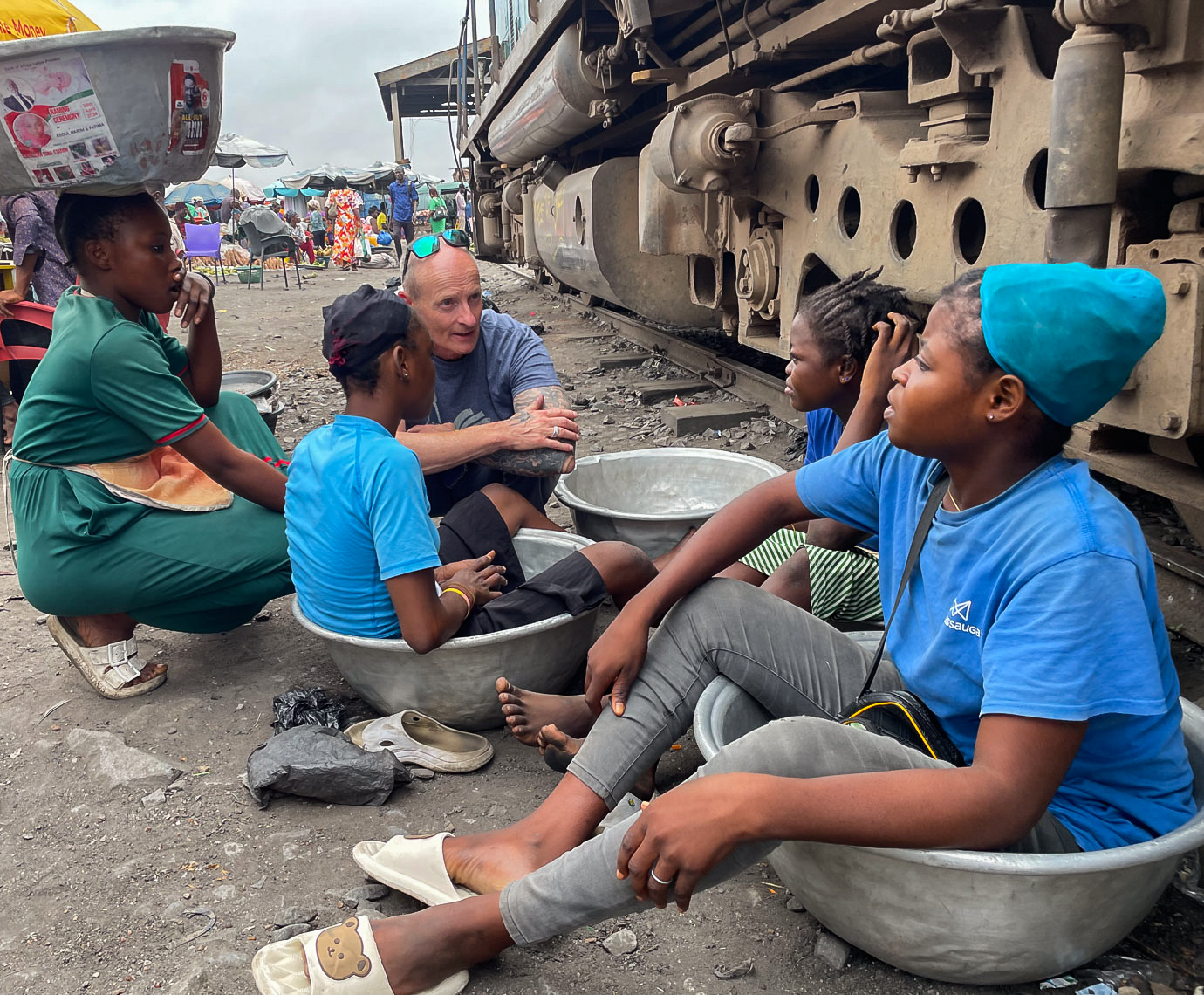
Why children are trafficked in Ghana: the causes
Poverty is the first cause, but it is not the whole explanation. Poverty becomes trafficking when it meets four other things.
Family duty. In much of Ghana a child’s work is part of belonging to a family. Sending a child to an uncle on the lake, an aunt in the city or a master to “learn a trade” is a familiar arrangement. Traffickers use that familiarity. The recruiter is usually someone the family knows.
Informal fostering. Children who have lost a parent, or live with a step-parent or distant relative, are the easiest to let go. They are often the first chosen when a broker comes asking for help.
The cost of school. Basic education is free in law, but uniforms, books, food and transport are not. When a family cannot meet those costs, the child who stops going to school becomes a child available for work. More than 1.2 million children aged 4-17 were out of school at the 2021 census.
Geography and gender. Opportunity sits in the south and the cities. Need sits in the north. That is why northern Ghana is the main source region. Girls carry an extra burden: they are the ones taken out of school to work or care, and they face early marriage. In the North East, Savannah and Northern regions, more than one girl in ten aged 12-17 is already married or living with a man.
There is also a demand side, and it is usually left out. Children are trafficked because someone profits from cheap, obedient labour on boats, farms and mining sites, and because men pay for sex with girls in fishing towns, mining areas and cities. Prevention that only works on the vulnerability of children, and never on the people who exploit them, is half a response.
What young people in northern Ghana told us
In 2023, before we designed our school program, the Hope Education Project held ten focus groups with 120 young people aged 11 to 25. They took place in Agbogbloshie and Jamestown in Accra, in Dimala and Dushegu near Tamale, and in Walewale in the North East Region, with in-school and out-of-school youth, boys and girls in separate groups. A paper on the findings, led by Dr Maryam Rafieifar of the University of Texas at Arlington, is under peer review. The main points are already shaping our work.
- Harmful work was described as duty. Across every group, young people talked about selling goods, farm work, domestic work and caring for siblings as responsibility, not exploitation, even where it ended their schooling.
- Offers from outsiders were hard to refuse. In one girls’ group near Tamale, six out of ten said they would go with a stranger who offered gifts and a move to the city, because their parents would welcome the support.
- Migration felt normal. Moving south as kayaye was described as familiar and expected. Risk travelled along routes that already felt safe.
- Risk looked different by place and gender. Northern groups talked more about labour, migration and early marriage. Urban groups talked more about deceptive job offers and sexual exploitation, including of boys, which is far less visible in the research.
- Protection came from school and mothers. Young people named school as what kept them safe, and mothers, again and again, as the adults who fought to keep them in it.
- Rural youth often did not know where to report. Urban groups could name the police, DOVVSU or CHRAJ. Rural groups mostly said “the authorities”.
That last finding matters as much as any national statistic. A child cannot report what they do not recognise as harm, to a service they cannot name.
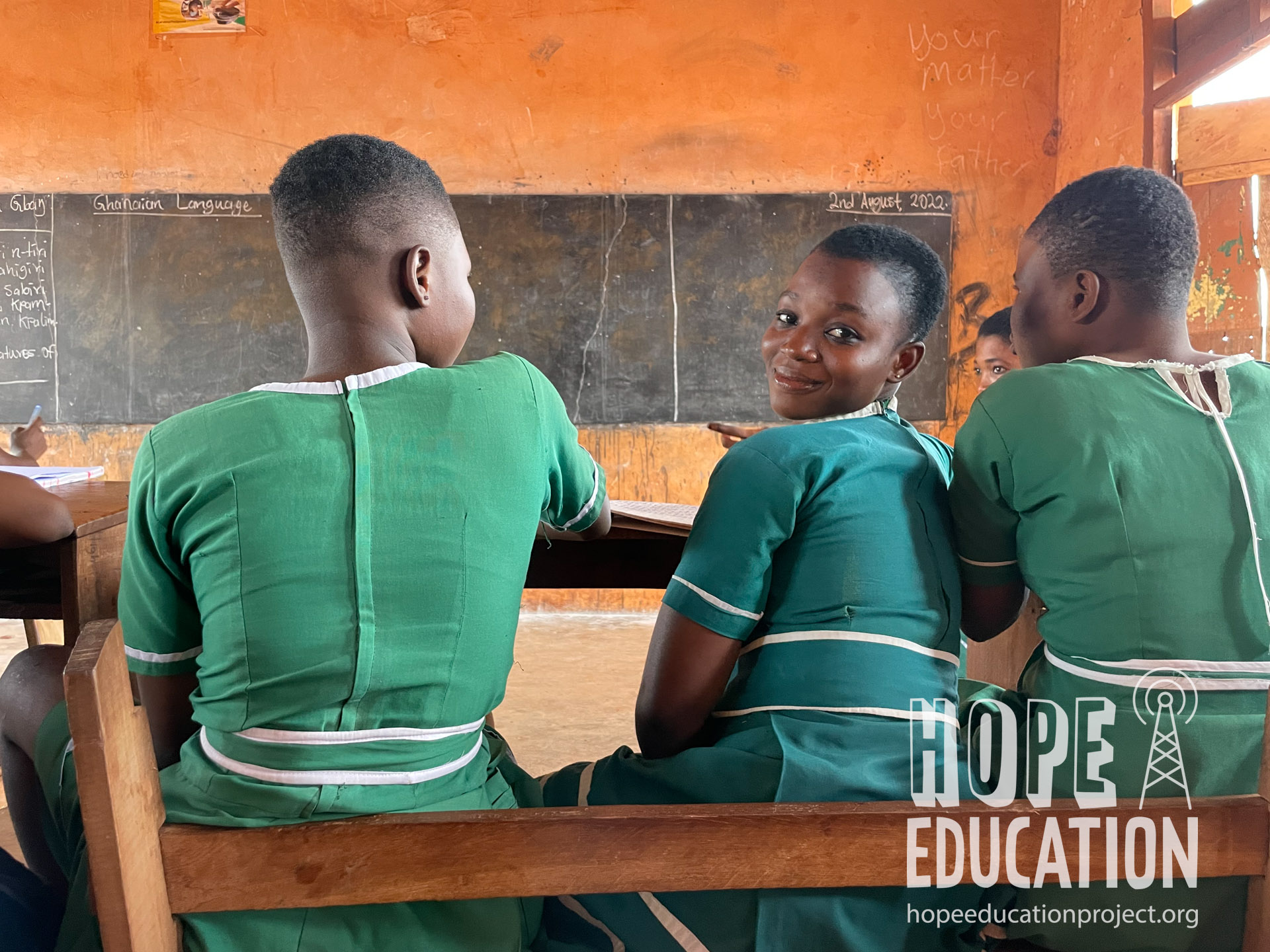
After the lake: why removal is not the end
A new study from Lake Volta adds the other half of the picture. In Narrative Inquiry With Adolescent Survivors of Child Labour and Trafficking in Lake Volta (Children & Society, 2026), Joha Issaka Braimah interviewed 13 children aged 11 to 16 who had been removed from the lake, and two senior practitioners.
The children’s routes in match what our focus groups described. Hunger at home, the loss of a parent, a relative choosing which child could go, a broker promising training. Several were told it was an apprenticeship. Once they were removed from the lake, the children were safer but not free of the pressures that sent them there. Braimah calls this “conditional freedom”: safety that depends on shelters, school fees and NGO support that the children know may end, with families and debts still waiting at home. Older children returning to school far behind their age group felt that most sharply.
The lesson for Ghana is direct. Rescue operations remove children from danger. They do not change the household, the school costs or the local norms that put the child on the boat. That has to happen before a child leaves home, and it has to continue after they return.
What Ghana is doing, and where it falls short
The 2026 upgrade to Tier 1 reflects real enforcement. In 2025 the government investigated 222 trafficking cases, prosecuted 212 suspects and convicted 28 traffickers, and it ran three shelters for child victims. The Ghana Accelerated Action Plan Against Child Labour 2023-2027 and the National Plan of Action for the Elimination of Human Trafficking 2022-2026 set the policy frame, and work on a new trafficking plan for 2027-2031 has begun.
The gaps are at the child’s level. The US Department of Labor’s latest findings count 176 labour inspectors for the whole country and only three convictions for the worst forms of child labour. In 2024, 856 labour inspections did not identify a single child victim. Informal child placements, the route most children described, have almost no oversight. Tier 1 is a judgement on the government’s effort against traffickers. It is not a measure of how many children are still at risk.
What prevents child trafficking
The evidence points the same way from both ends: from children already exploited on the lake, and from young people still at home in the north.
- Keep children in school. School is the protection young people name first. Help with uniforms, books, food and transport is anti-trafficking work.
- Teach recognition, not just fear of strangers. Most recruitment comes through people children trust. Prevention has to help children and parents see when a familiar arrangement - an apprenticeship, a relative’s offer, a job in the city - has become exploitation.
- Work with mothers and caregivers. They are already the adults keeping children in school and questioning unsafe offers. Programs should strengthen that role, not bypass it.
- Make reporting real in rural areas. Clear, local information on who to call, in schools, markets and transport hubs.
- Fit prevention to the place. The risks in Walewale are not the risks in Jamestown.
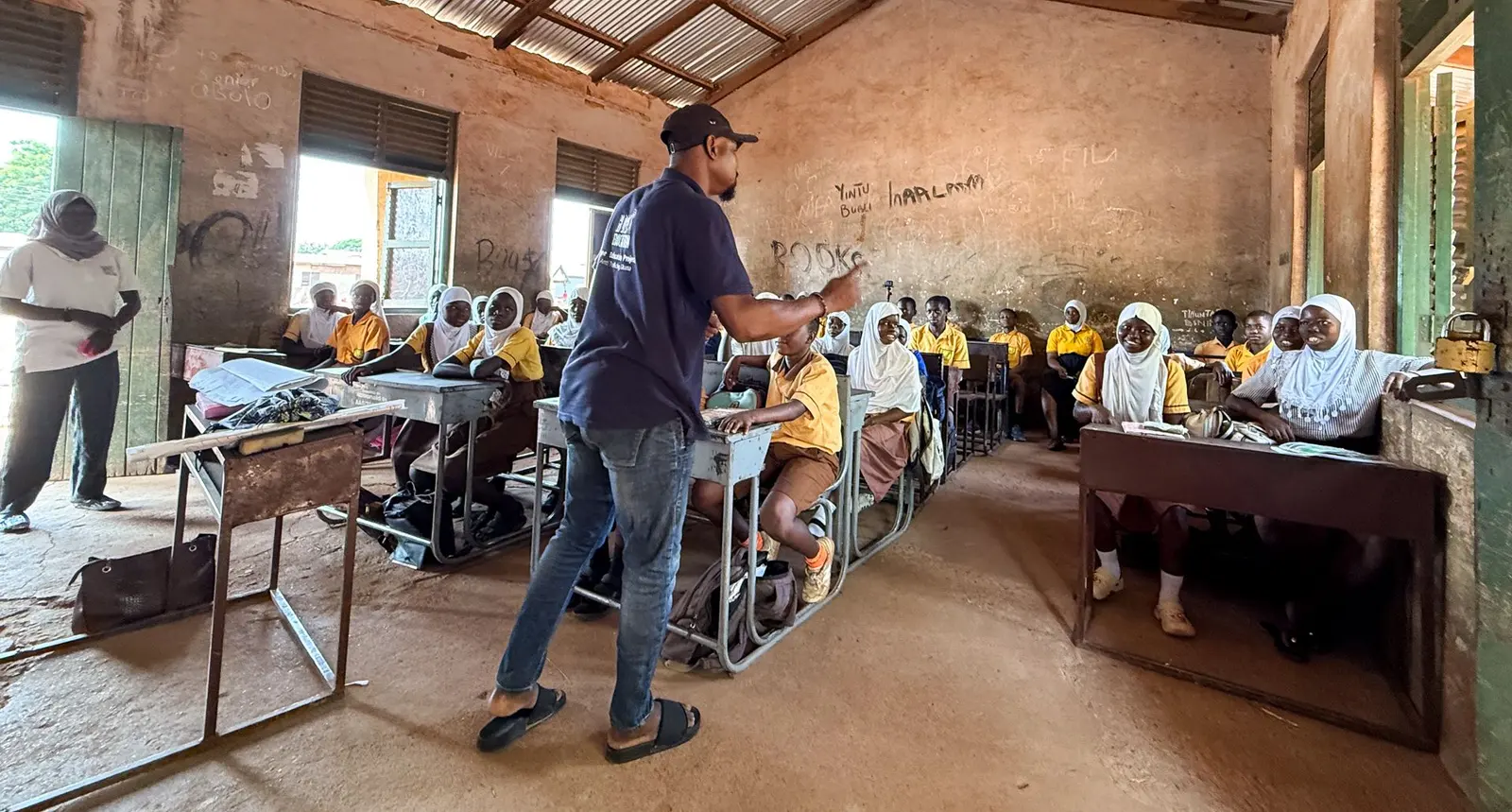
This is what our SMART Schools Program is built on. In the Tamale Pilot in early 2025, we delivered five modules inside the Ghana Education Service timetable in three junior high schools, reaching 300 students directly and 900 more through handouts, and ran four survivor-led community sessions that reached 200 out-of-school girls. Students wrote and performed their own prevention plays for their peers. Every child was asked to name three trusted adults they could turn to. Many found that hard at first, which is a finding in itself. Our SOMA Girls’ Empowerment Program works with girls at the move from junior to senior high school, when the pressure to leave school is greatest.
How to report child trafficking in Ghana
If a child is in immediate danger, call the Ghana Police Service on 191 or go to the nearest police station. To report abuse or exploitation of a child, the Ministry of Gender, Children and Social Protection lists the Domestic Violence Call Centre on 0800-111-222 and its Helpline of Hope on 0800-800-800 or 0800-900-900. The police Anti-Human Trafficking Unit and the Domestic Violence and Victim Support Unit (DOVVSU) handle trafficking cases.
Frequently asked questions
Is child trafficking common in Ghana?
Yes. Ghana identified 2,331 trafficking victims in 2025, and studies in Lake Volta fishing communities found more than a third of children surveyed were likely trafficked. Most child trafficking in Ghana is internal, from poorer rural areas, especially the north, to fishing, farming, mining and cities.
What are the main causes of child trafficking in Ghana?
Poverty, combined with family arrangements that send children to relatives or “masters” to work, the hidden costs of school, the gap between the north and the south, and gender norms that take girls out of school. Demand for cheap child labour and for the sexual exploitation of girls keeps the trade profitable.
Where are children trafficked in Ghana?
Into fishing on Lake Volta and the coast, cocoa and other agriculture, herding, artisanal gold mining and quarrying, domestic service, head porterage (kayaye), street hawking and begging, and sexual exploitation in cities, fishing towns and mining areas.
What is Ghana’s Tier ranking for human trafficking?
Tier 1, since the US State Department’s 2026 Trafficking in Persons Report, published in October 2026. In the 2025 report Ghana was on Tier 2. The upgrade recognises more prosecutions, convictions and victims identified.
What is the difference between child labour and child trafficking?
Child labour is work that is illegal for a child’s age or harmful to them. Child trafficking is the recruitment, movement, handing over or holding of a child for exploitation. Under Ghana’s Human Trafficking Act, the consent of the child or the parents is no defence.
How does education prevent child trafficking?
School keeps children in a protected routine with adults watching out for them, and lessons on trafficking help children and families recognise unsafe offers before a child leaves home. Young people in our focus groups named school as their main protection.
The point
Ghana has shown it can prosecute traffickers. The next step is harder and less visible: making sure the child in Walewale or Dushegu, offered an apprenticeship on the lake or a job in Accra, and the mother deciding whether to let them go, can recognise what that offer may be. That is prevention at the source, and it is where the Hope Education Project works.
Stay in touch
Join our mailing list
Occasional updates on our work in Northern Ghana, straight to your inbox.