
Our work
The three pillars
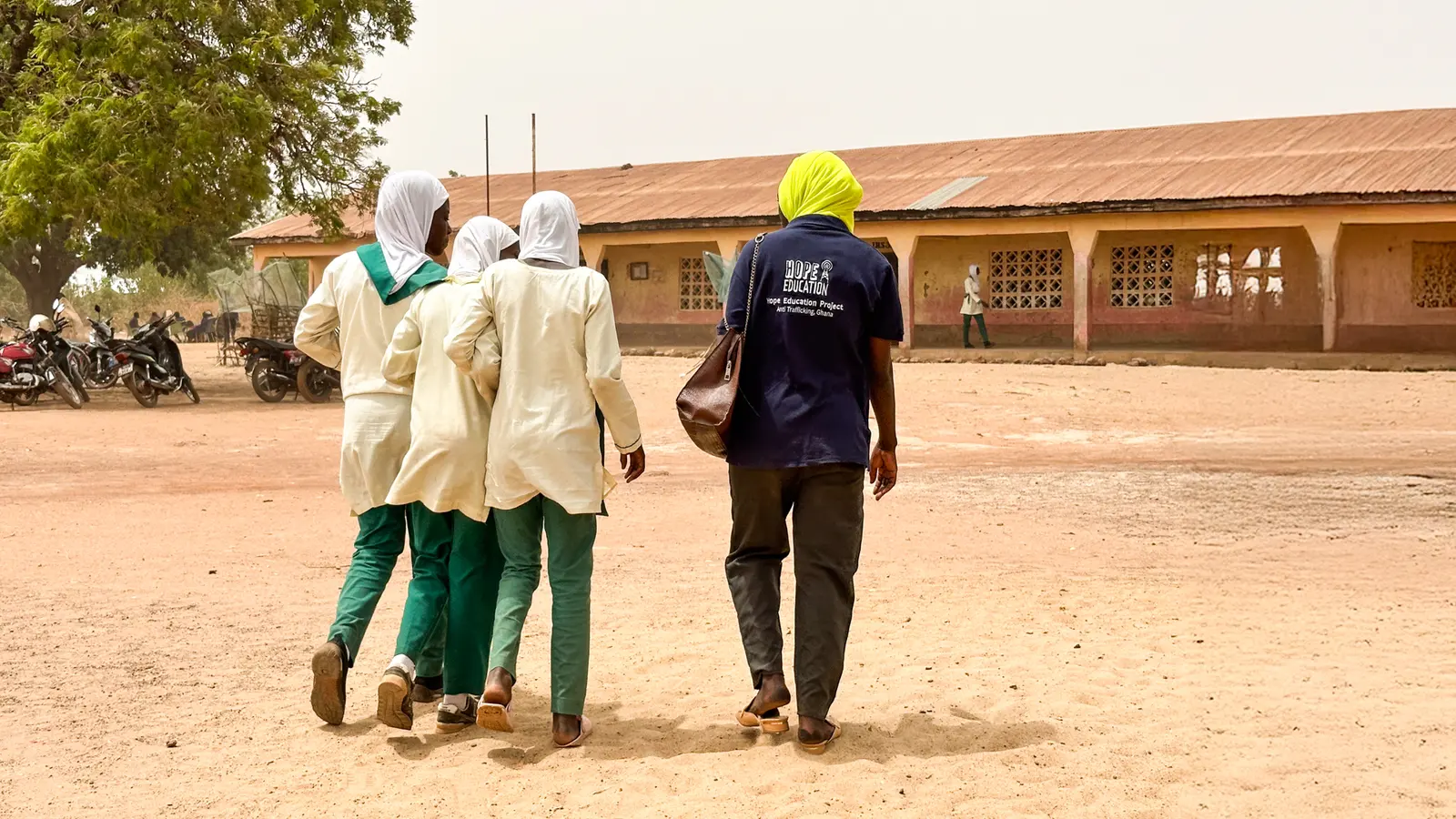
Hope Education Project is a survivor-led anti-trafficking organisation working through schools and communities across Northern Ghana. It strengthens trafficking prevention at the source by equipping young people and the adults around them to recognise risk, make safer decisions, and respond early to concerns.
Pillar 1
Equip Young People
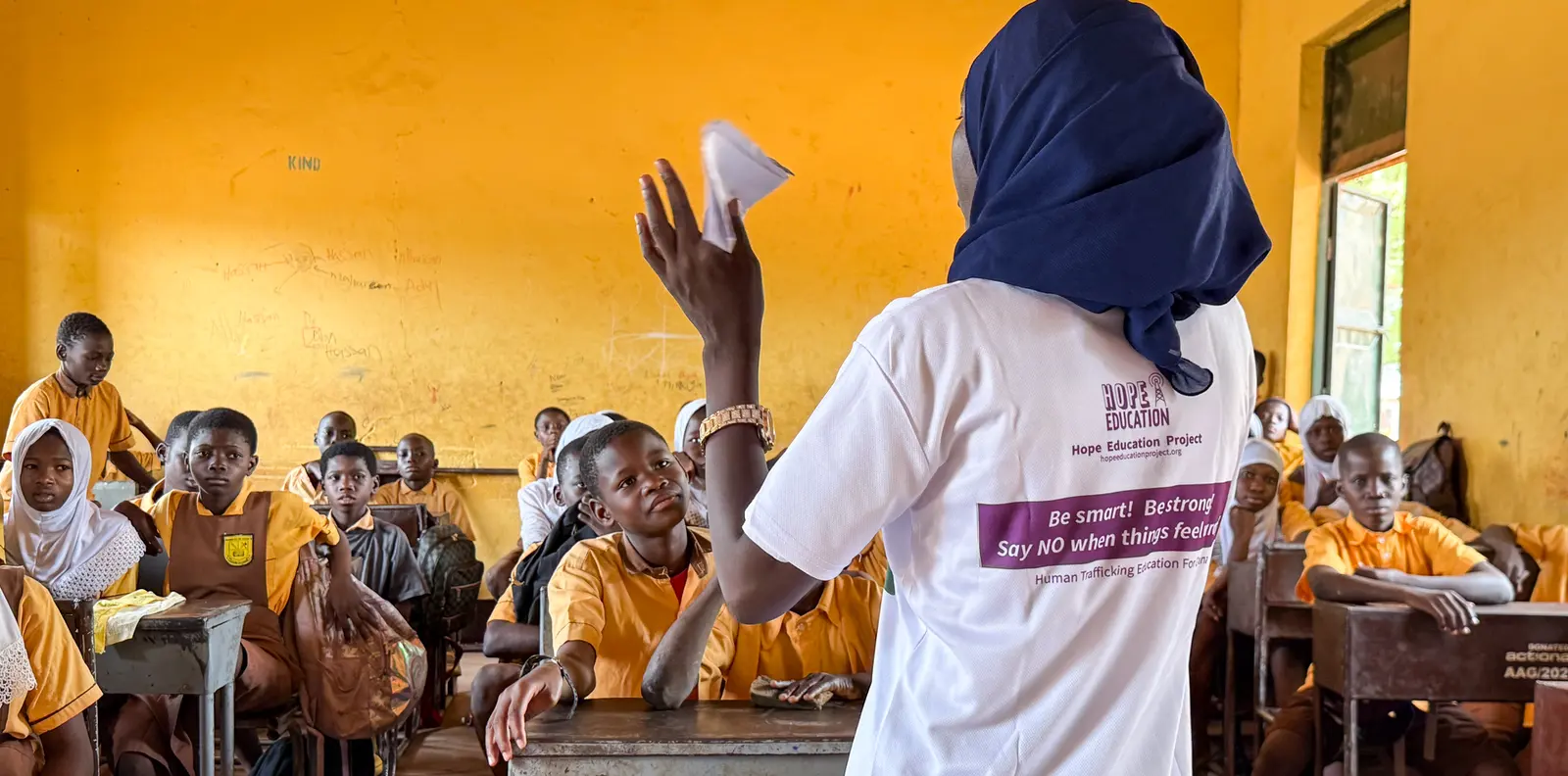
Young people gain the knowledge, confidence, and practical skills needed to recognise trafficking risks, resist recruitment, make safer decisions, and adopt protective behaviours that reduce their vulnerability to exploitation.
- SMART Schools Program
- A five-module trafficking prevention cycle delivered inside the Ghana Education Service school timetable at JHS1; students learn to recognise vulnerabilities and recruitment tactics, stay safer online, identify trusted adults, and refuse and report unsafe situations, and create their own prevention plays performed to peers.
- The SMART Schools ProgramTamale Pilot
- SOMA Girls' Empowerment Program
- A sisterhood circle for girls at the transition from JHS to SHS, when vulnerability rises; girls learn to recognise unsafe situations, set boundaries, strengthen decision-making, identify trusted adults, and support one another.
- SOMA: Safe spaces. Strong voices. Sisterhood.
Pillar 2
Strengthen Protective Communities
Families, schools, and communities become stronger protective networks that reinforce safer choices, identify risks earlier, and respond when concerns arise.
- Community Prevention Program
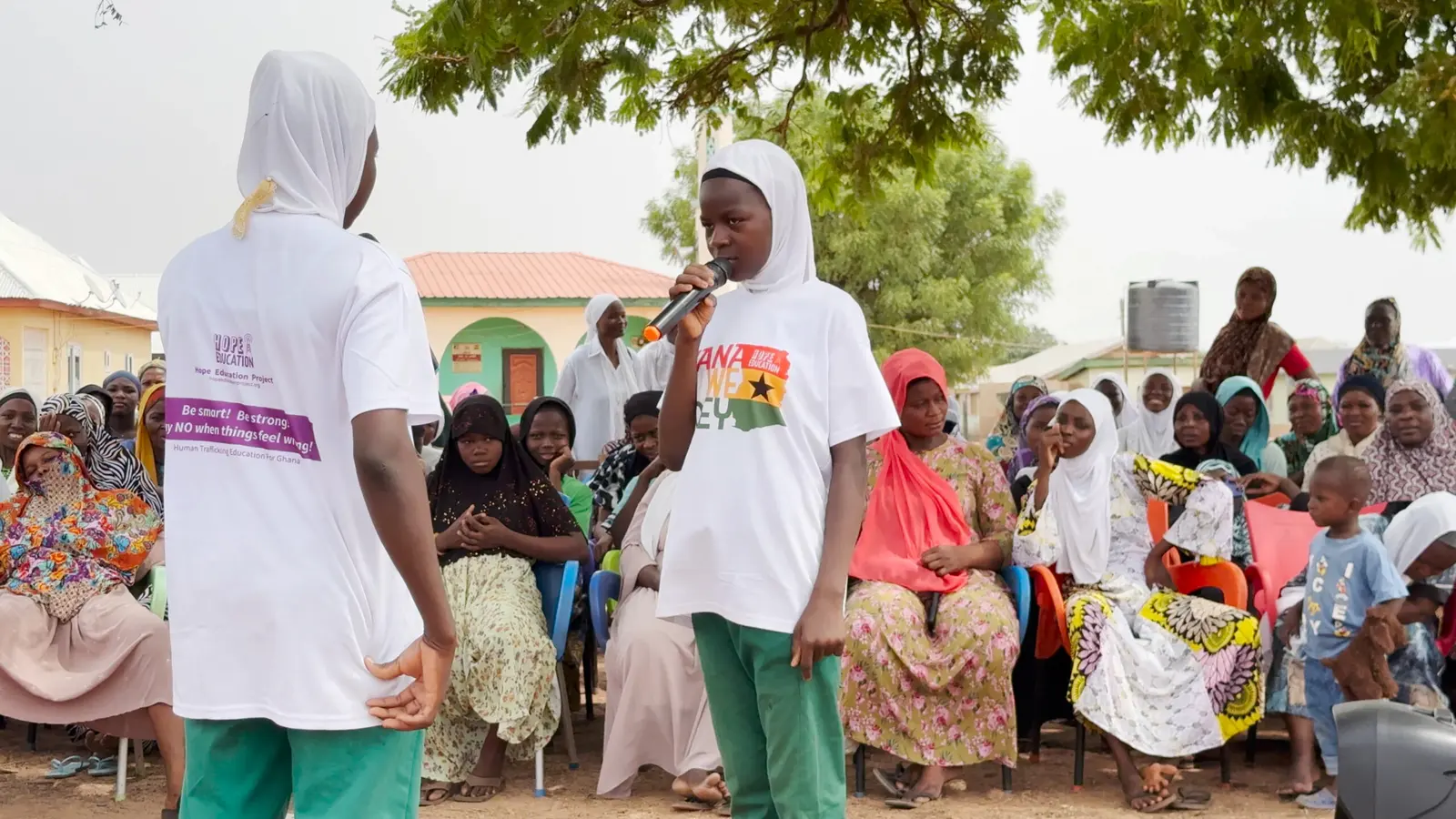
- Survivor-led sessions with women, out-of-school girls, men, and boys that build community awareness of trafficking risks and strengthen local protective responses; student prevention plays from the SMART Schools Program share prevention messages with the wider community; men and boys are engaged as protective actors.
Pillar 3
Strengthen Prevention Systems
Research, innovation, training, and partnerships strengthen trafficking prevention practice and extend impact beyond Hope Education Project's direct delivery.
- Training of Trainers
- Equips partner organisations to deliver HEP's prevention model within their own programs, with scoping, facilitator training, curriculum, and monitoring tools.
- Research and Evaluation
- Research partnerships with the University of Texas at Arlington and Washington University in St Louis generate primary evidence on human trafficking, forced migration, gender-based violence, men as protective factors, transactional sex, and online safety.
- Research
- AI Applications for Prevention
- Digital and AI-supported tools including an AI-enabled safe-migration app that helps young work seekers test opportunities, recognise risk, and find out where to report concerns.
How change happens
The causal chain
- EquipHope Education Project equips young people, families, schools, and communities with knowledge, confidence, trusted relationships, and practical prevention skills.
- Recognise and resistBetter-informed young people recognise trafficking risks, resist unsafe recruitment, make safer decisions, and seek help from trusted adults.
- Respond earlyBetter-prepared families, schools, and communities identify risks early, reinforce safer choices, and respond when concerns arise.
- ProtectThese protective networks reduce vulnerability and strengthen community-level prevention.
- PreventOver time, this contributes to reducing trafficking risks at the source, before exploitation occurs.
Stay in touch
Join our mailing list
Occasional updates on our work in Northern Ghana, straight to your inbox.