
HOPE EDUCATION RESEARCH TEAM
Human Trafficking and Child Sexual Exploitation Research
We are constantly seeking to increase our understanding of the issues related to human trafficking not only in Ghana but globally. Whilst there may be some universal push and pull factors, interventions should be informed by the local context. At HEP we are undertaking research in the communities in which we serve and with the survivors within our network from our sister campaign, Stop Trafficking Africa.
Current research
The first strand is our ongoing evaluation of the SMART Schools Program pilot, examining both pedagogy and impact. Three research papers are currently out for peer review.
Youth Understandings of Trafficking Risk and Protection in Ghana
Written by Dr Maryam Rafieifar at the University of Texas at Arlington and Dr Daniela Peterka-Benton at Montclair State University. The research draws on interviews conducted by HEP founder Angus Thomas with students and young people in Jamestown, Agbogbloshie, Tamale, and Walewale.
Seeing Exploitation, Failing to Act: The Missing Link in Sex Trafficking Response
Written by Dr Maryam Rafieifar at the University of Texas at Arlington. The first paper to emerge from 40 hours of interviews with Nigerian survivors of sex trafficking to the UAE. It examines the survival strategies of trafficking survivors, the role of men in reporting trafficking, and the role of men as protective factors.
Sisterhood, Opportunities, Mentorship, and Agency: A Community-Designed Pilot Empowerment Programme for Adolescent Girls in Northern Ghana
Written by Dr Maryam Rafieifar at the University of Texas at Arlington. This paper examines the SOMA pilot program — its pedagogy, outcomes, and opportunities for further iterations.
Upcoming research
Pathways from Poverty to Exploitation: A Qualitative Study of Transactional Sex, Mental Health, and HIV Vulnerability Among Young Women in Northern Ghana
In January 2027, we begin a new research project led by Dr Mitra Naseh at the Forced Migration Initiative, Washington University in St Louis.
The research grew out of our focus groups with Teacher Patrons, Head Teachers, and pupils following the SMART Schools pilot in 2025. Those sessions revealed that girls as young as 14 were engaging in transactional sex in exchange for mobile data.
The project will work with women aged 18 to 23 in Aboabo, Tamale, to establish the extent of this practice. It will lay the foundations for follow-up research with girls aged 12 to 15 in full-time education.

Dr Maryam Rafieifar
Assistant Professor at the University of Texas at Arlington School of Social Work, USA
Dr Maryam Rafieifar is an Assistant Professor at the University of Texas at Arlington School of Social Work. Her research specialty is targeted at serving disenfranchised children and families with community-based participatory methods. Her translational objective is to mitigate the effects of immigration enforcement on trauma among children born to immigrant families through examining community-based initiatives. Her ongoing work explores the impact of immigration-related stress on parenting practices, investigating how this stress affects parent-child relationships and the potential link to child maltreatment risk. She has advanced training in quantitative and qualitative research methods and is presently conducting systematic reviews and meta-analyses. Internationally and nationally, Dr Rafieifar has collaborated with organizations like the United Nations, the International Committee of the Red Cross, and local nonprofits in South Florida, leveraging her insights to support immigrant communities effectively.
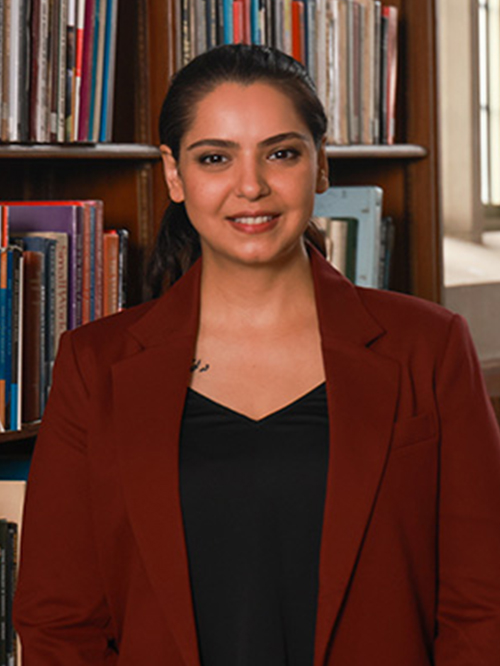
Dr Mitra Naseh
Assistant Professor and the Founding Director of the Forced Migration Initiative at the Brown School, Washington University in St. Louis, USA
Mitra Naseh is a forced migration scholar and Assistant Professor at the Brown School, Washington University in St. Louis, where she is also the Founding Director of the Forced Migration Initiative. Her research focuses on the social and economic integration of forcibly displaced populations, drawing on her interdisciplinary training, lived experience as an immigrant, and fieldwork with NGOs and UN agencies in the Middle East and South Asia. She is co-author of Best Practices in Social Work with Refugees and Immigrants (Columbia University Press, 2019), and her work has been supported by the Russell Sage Foundation, Missouri Foundation for Health, and other funders. In the U.S., her recent projects examine barriers refugees face in accessing services in Missouri, while internationally she is leading a study in Türkiye on the impacts of combined psychosocial and cash assistance for Afghan asylum seekers.
Beyond research, Naseh actively contributes to academic and community service. She co-chairs the Immigrants and Refugees Cluster of the Society for Social Work and Research (SSWR), previously served on the Executive Committee of the International Association for the Study of Forced Migration (IASFM), and is on the Advisory Board of the International Institute Community Development Corporation. She has also been an Executive Committee member of the Immigrant Service Providers Network in St. Louis, reflecting her commitment to connecting scholarship with practice and policy.

Dr Daniela Peterka-Benton
Director, Global Center on Human Trafficking at Montclair State University, USA
Daniela Peterka-Benton is an associate professor in the Department of Justice Studies and serves as the coordinator for the department’s International Justice concentration. She has a PhD in Sociology with a specialization in Criminology from the University of Vienna, Austria, a Master’s degree in Criminal Justice from the University of Cincinnati, and a Master’s degree in Adult and Media Education from the University of Vienna.
Her research interests center around transnational crimes such as human trafficking, human smuggling, arms trafficking, and right-wing terrorism and extremism. Dr Peterka-Benton has published numerous articles in peer-reviewed journals including International Migration Review, The Journal of the Institute of Justice & International Studies, Studies in Conflict and Terrorism, and The Journal of Applied Security Research. In 2022, she published the co-authored book Introduction to International Justice.
More recently Dr Peterka-Benton completed a grant project funded by the New Jersey’s Division of Criminal Justice with two of her Montclair State colleagues, analyzing human trafficking data reporting, law enforcement response, and improvements for data collection methodologies such as the use of a statewide database on human trafficking. Another area of interest to her is the role of misinformation and disinformation on various issues including human trafficking. Her research on how QAnon has hijacked the human trafficking discourse was published in the journal Anti-Trafficking Review.
Dr Peterka-Benton teaches numerous courses including, Human Trafficking, Intro to International Justice, Crime and Globalization, and Comparative Criminal Justice Systems. Prior to her focusing on a full-time academic career, Daniela Peterka-Benton worked for the U.S. State Department’s Office of Diplomatic Security at the U.S. Embassy in Vienna, Austria.