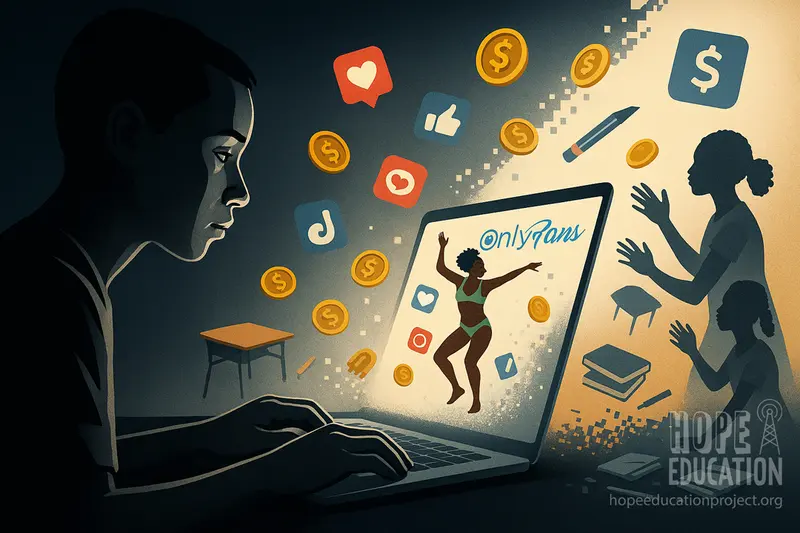
The TikTok to OnlyFans Pipeline: Why It Reaches Girls in Tamale Too
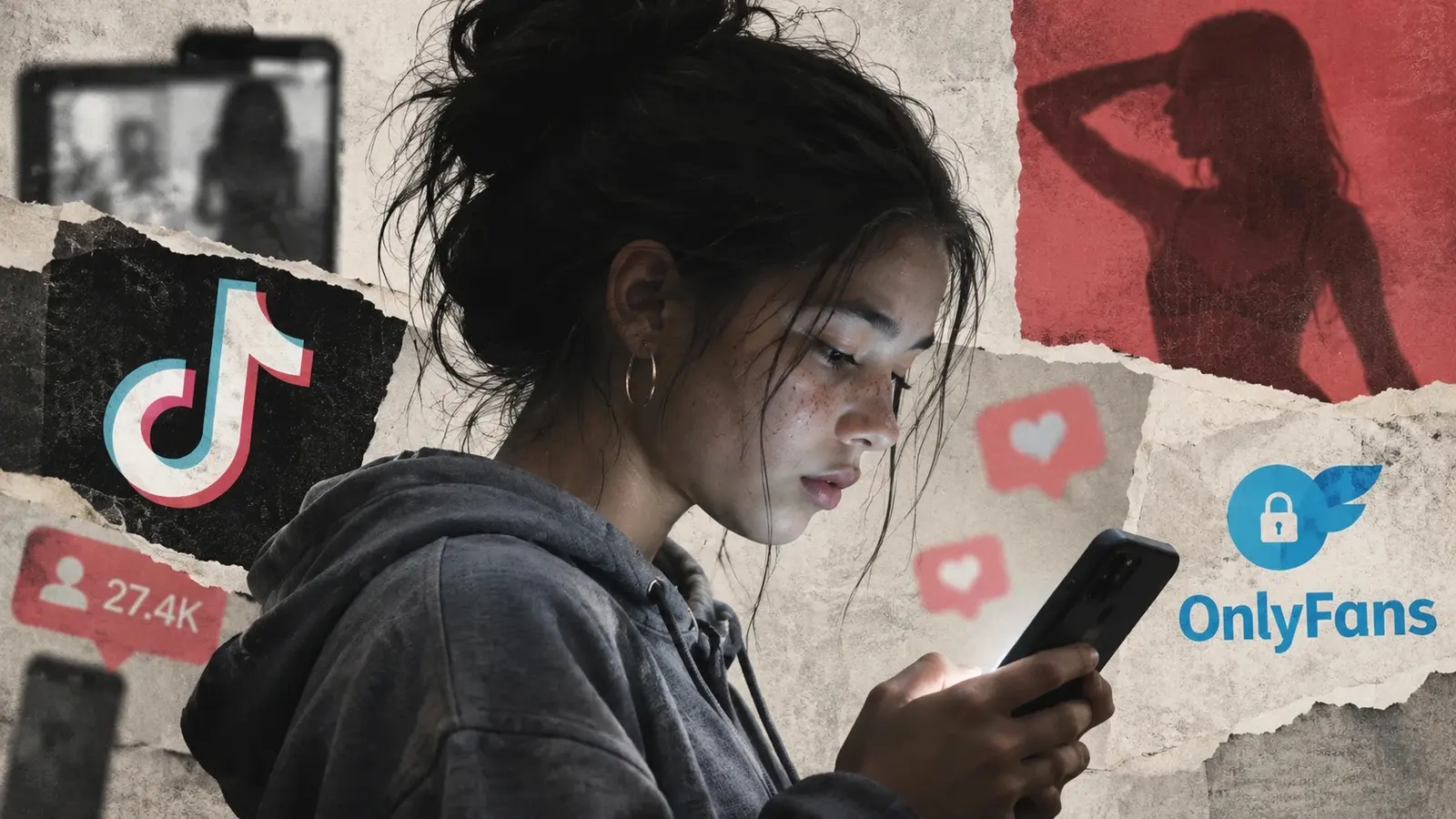
New research from two campaigning organisations, Cease in the UK and Collective Shout in Australia, shows how OnlyFans performers use TikTok to sell the sex industry to girls. The Guardian reported the findings on 7 November, ahead of the report’s launch on 9 November. Last year we wrote about the same pull on adolescents in Spain and Northern Ghana. This research shows the mechanism behind it.
How the pipeline works
TikTok bans links to OnlyFans and bans sexual solicitation. It does not ban the performers. The researchers spent a year following some of OnlyFans’ most popular young performers on TikTok, then followed what TikTok’s algorithm recommended next.
What they found was not explicit content. It was lifestyle content - shopping, baking, pets, skincare, “get ready with me” make-up videos - with coded references to pornography worked in. A corn emoji stands in for “porn”. Gestures and euphemisms tell viewers where the paid content is. Auditions for a Miami house where women produce content together are posted on TikTok, and would-be recruits reply with suggestive dance videos of their own.
The message running through it is simple. Selling sexual content brings money, freedom, friends and a life of luxury. Posts show cash, big houses, private jets and cars. Some tell rags-to-riches stories, presenting OnlyFans as the way out of poverty and unemployment for a girl and her struggling family.
The report focuses on TikTok because it has so many young users, and because it is where many OnlyFans careers begin.
The money is not what it seems
OnlyFans’ own figures, cited in the report, show its top 5,000 creators have each made more than $1m since 2016. The site has around 5 million registered performers. Their average earnings are estimated at about $1,000 a year.
So the promise is built on a tiny fraction of performers. For almost everyone else, the content is permanent and the income is small.
The buyers are in the headline
One post the researchers quote carries the caption “how it feels knowing I own all of this at 23 thanks to 250,000 men”. It is meant as a boast. It is also the clearest statement in the report of where the money comes from.
Most discussion of this pipeline is about the girls being drawn in. The demand comes from men who pay, and from the platforms and brands that profit from the attention. A global cosmetics brand popular with teenagers hired one of these performers as a brand ambassador last year. That is normalisation paid for by advertisers. Any serious response has to look at the buyers and the business model, not only at the girls watching.
Why it reaches Tamale
The feed a girl sees in Tamale is not a different feed. The same performers, the same luxury and the same rags-to-riches stories reach her as soon as she is online.
In our 2025 article we set out what we found during the Tamale Pilot. Girls as young as 14 were trading sex for mobile data to get onto social media. Every girl in our post-pilot focus groups, aged 12 to 16, reported receiving explicit images and grooming attempts from adult men. We described a grooming pipeline: girls already trading sex for data are easy targets for content that frames selling sexual content as an improvement.
The Cease and Collective Shout research shows the other half of that pipeline. A story that says OnlyFans will rescue a girl and her family from poverty is aimed at exactly the girls whose families are poorest. In Spain, as the study we cited last year found, teenagers saw it as an achievable career. In Northern Ghana, where poverty is real and digital literacy is low, the same promise can look like the only way out.
The risks also land harder. Girls in Tamale often share phones and may not understand how content is saved, shared and resurfaces. In a conservative community, the reputational harm can be severe. And a girl who has been persuaded that selling sexual content is a career is easier for a trafficker to approach with a “better offer”. We have seen the same glamour used elsewhere, from influencer culture in Dubai to the fake job offers we track online.
What the platforms say
TikTok told the Guardian that it strictly prohibits sexual content, uses advanced technology to enforce its rules, and designs its systems to keep age-inappropriate content away from teenagers. OnlyFans said it is for over-18s only and has strict checks to stop minors joining.
Both statements can be true and the pipeline can still work. Nothing in these videos is explicit. That is the point. The report’s authors want the existing ban on showing pornography to under-18s extended to content that promotes the sex industry. Whatever the law does, platforms do not have to wait for it to stop their algorithms recommending this content to children.
What helps
Regulation matters, but a girl in Tamale will meet this content long before any law catches up with it. What protects her is knowing what she is looking at.
That is why Module 3 of our SMART Schools Program covers digital safety: friend requests, selfies, sexting, sextortion, deepfakes, the myth of anonymity and the permanence of anything posted online. Girls who understand how recruitment works, online and offline, are better able to recognise a sales pitch dressed up as a lifestyle. For girls out of school, our SOMA Girls’ Empowerment Program builds sisterhood, mentorship and a sense of what is possible, so that the rags-to-riches story on her phone is not the only one she hears.
The TikTok to OnlyFans pipeline is a global business. The girls it reaches in Northern Ghana deserve the same knowledge and the same protection as girls anywhere else.
Stay in touch
Join our mailing list
Occasional updates on our work in Northern Ghana, straight to your inbox.