Trafficking Through Sport in Ghana: What IOM's New Evidence Shows

The International Organization for Migration (IOM) has published a policy advocacy brief on human trafficking through sport in Ghana, written to support the Government’s National Dialogue on the issue. This week IOM also took the message to the media. At a training for journalists, reported by the Daily Guide, IOM’s communication consultant Maaweh Tanga warned young athletes that traffickers are using the promise of a career abroad to recruit them.
The work behind it began after a national youth and sports dialogue held alongside the Africa Games in Accra in March 2024. According to the IOM Development Fund, which funds it, IOM is working with the Ministry of Sports and Recreation, the Ministry of Youth Development and Empowerment, the Ministry of Gender, Children and Social Protection, the Ghana Police Service and the Ghana Immigration Service. It has completed a gender-sensitive baseline assessment, which IOM describes as Ghana’s first comprehensive evidence base on trafficking in sport. A National Forum on Trafficking in Sports followed in March 2026.
The brief is short, but its numbers are clear.
What the evidence shows
From IOM’s survey of athletes in Ghana:
- 96 per cent want to pursue sports opportunities abroad.
- Only 27 per cent have written contracts with their clubs or academies.
- One in three has received an overseas offer, often involving large payments or handing over documents.
- Over 75 per cent showed low or no awareness of trafficking risks.
The brief also records that the harms differ by gender. Boys face labour exploitation and abandonment abroad. Girls face sexual exploitation and coercion.
The brief does not say how many athletes were surveyed, or when. The pattern it describes is still consistent: a very strong pull to go abroad, very little paperwork to protect the athletes, and little understanding of how the offer can go wrong.
How the recruitment works
The recruitment IOM describes will be familiar to anyone who has looked at fake job offers. A recruiter shows off an attractive lifestyle and promises a place at an international club. The athlete is then asked to pay for documents, flights and registration, and to keep the arrangement quiet.
Three points from the IOM briefing stand out.
The recruiter is often someone the athlete already trusts. According to Mr Tanga, many victims are introduced to these offers by coaches, scouts and other respected figures in the sporting community. Traffickers rarely arrive as strangers. They work through people a young person has reason to believe.
Proof can be faked. Mr Tanga warned athletes not to rely on photographs or videos as evidence of real connections, because artificial intelligence can now produce convincing images of people standing with famous footballers.
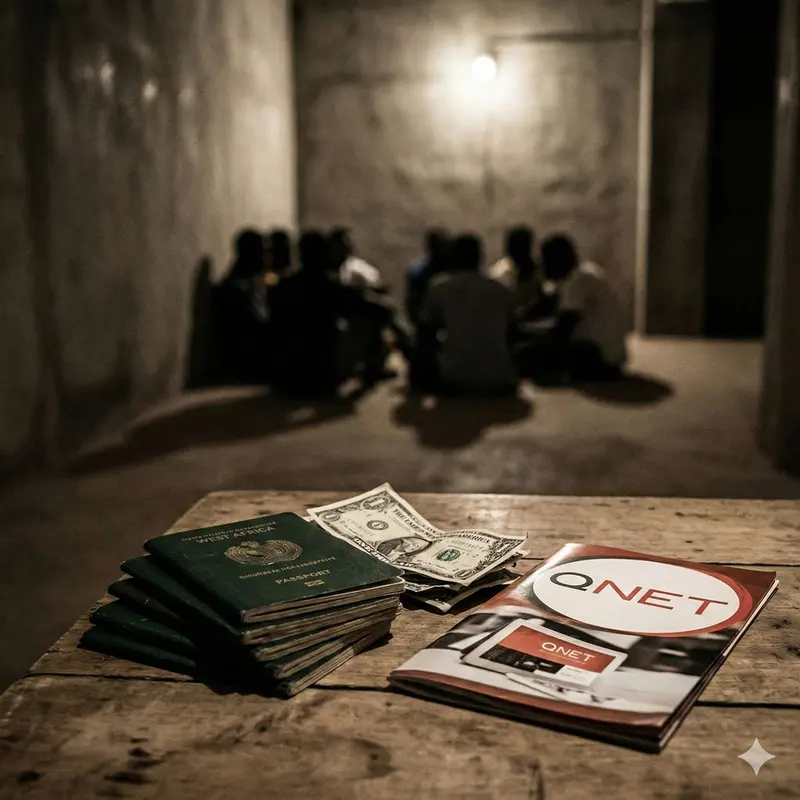
Fees and passports are the warning signs. The brief calls on the Government to ban up-front fees and the holding of athletes’ passports. Both are standard indicators of trafficking in every sector. A legitimate club does not ask a young player to pay to be signed, and it does not keep their passport.
Why the gaps matter
The brief is direct about why the risk persists. Sports-related trafficking is not explicitly recognised in Ghana’s anti-trafficking law or data systems. Oversight of academies and agents is fragmented. Sport is mostly treated as recreation, so athletes often fall outside labour protections. And the institutions responsible for sport, migration, labour and child protection do not work together closely enough.
Its six priority actions are:
- Recognise sport as a high-risk sector in Ghana’s anti-trafficking framework.
- License academies and agents, and ban up-front fees and passport retention.
- Make written contracts and safeguarding standards mandatory in every sport.
- Set up a coordination mechanism and a single way of tagging sport-related cases.
- Build safe sports migration education into youth and sports programmes.
- Make prevention and survivor support responsive to gender.
Some of this is already moving. The IOM Development Fund reports that the findings are shaping Ghana’s Play Abroad Program, run by the National Youth Employment Agency to give professional athletes regular and transparent routes abroad, with clearer rules for licensed agents and stronger oversight. The March forum also looked at new risks, including predatory agents, unlicensed academies and online scams linked to events such as the FIFA World Cup. The next phase is a communication strategy to reach young people, families and grassroots sport with the risks and the safe alternatives. This week’s media training was on that strategy.
Who profits
It is easy to read this as a story about naive young athletes. It is not. The demand comes from the intermediaries who charge athletes fees, the agents who hold their passports, and the clubs and businesses abroad that profit from cheap, unprotected labour or from sexual exploitation. The brief’s call for licensing, contracts and enforcement puts the responsibility where it belongs: on the people and businesses who make money from the athletes’ dreams.
IOM’s appeal to journalists makes the same point. Mr Tanga urged the media to check recruitment adverts, verify academies and agents, and ask hard questions before promoting overseas opportunities, because a trusted outlet can lend credibility to a trafficker without knowing it.
Where we fit
The fifth of IOM’s actions - education built into youth programmes - is the work we already do. Our SMART Schools Program teaches Junior High School students in Northern Ghana how recruitment works. Module 2 covers traffickers and trusted adults, including the fact that recruiters are often people a young person knows. Module 3 covers digital safety, including how images can be faked. Our guide to child trafficking in Ghana sets out why those lessons need to come early.
The athletes in IOM’s survey are not wrong to want a career abroad. Talented young Ghanaians play professionally all over the world. What protects them is knowing what a real offer looks like - a written contract, no fees, their passport in their own hands - before someone they trust brings them one that is not real.
Stay in touch
Join our mailing list
Occasional updates on our work in Northern Ghana, straight to your inbox.