Angus Thomas on Agency for Change: Prevention, Curiosity and the Five Men Who Asked
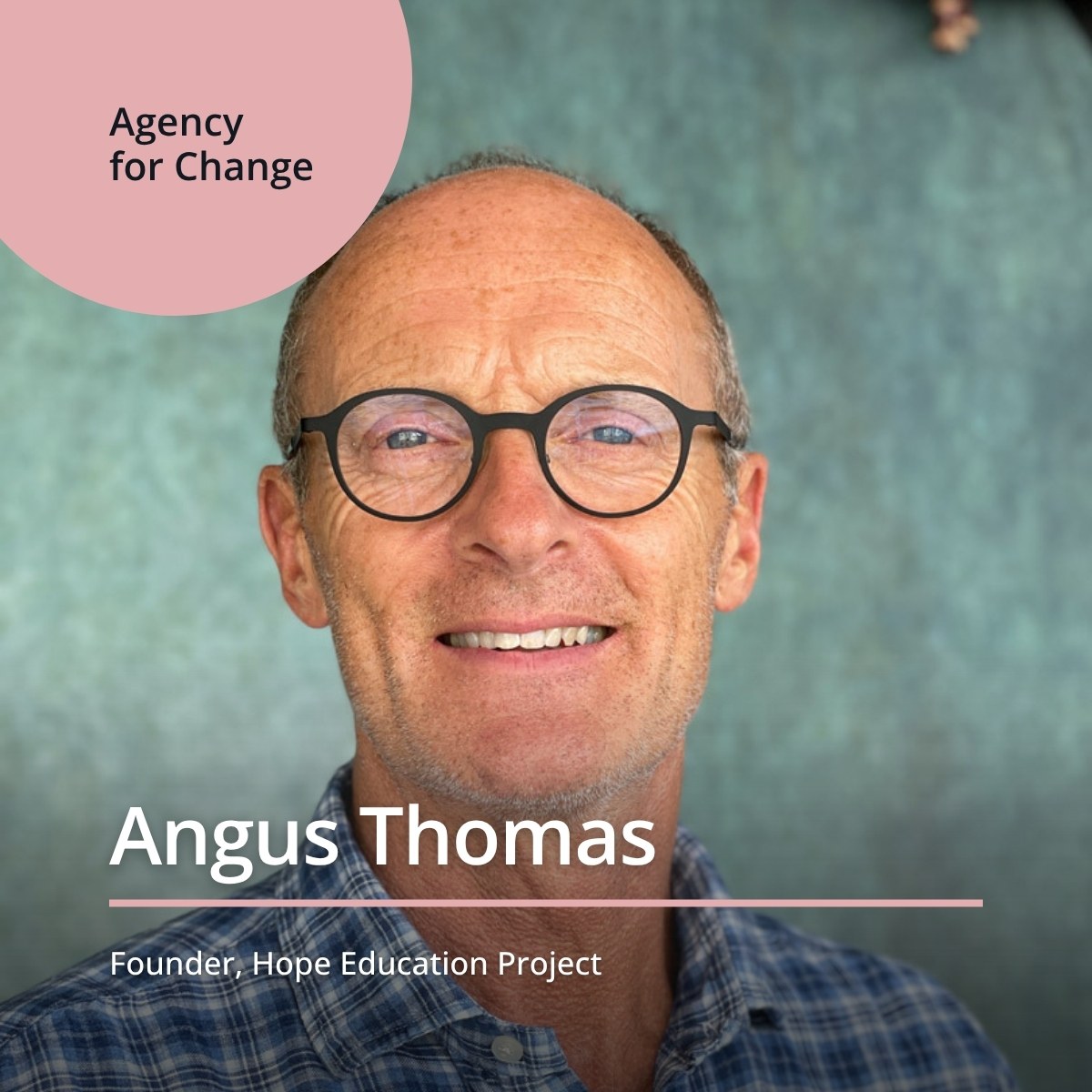
Our founder Angus Thomas joined Lyn Wineman on KidGlov’s Agency for Change podcast to explain why HEP stops trafficking at the source - in schools and communities in Northern Ghana - rather than after the harm is done. He also explains why it is easier to raise money for a woman in crisis than for keeping a girl out of one.

Where it started
On New Year’s Eve 2019, during a layover in Dubai, Angus met a 19-year-old West African woman. We call her Amy - not her real name. She had been recruited with the promise of a make-up artist job, had her passport taken on arrival and was held in a flat with 22 other women, trafficked for sexual exploitation.
That night led to a year of rescue and repatriation work with Nigerian women in the UAE, and five cases opened with Dubai Police. Read the full story.
Why prevention
The cost of rescuing one woman would educate 80 to 100 children. Prevention is still harder to fund, because a girl who was never trafficked doesn’t make a dramatic photograph.
Angus compares this with mass sensitisation campaigns that line children up, pin a badge on them and leave. “Some great pictures for the donors 9,000 miles away,” he says. “But not a lot of bang for their buck.”
What HEP teaches
The SMART Schools Program runs five modules over five weeks inside the Ghana Education Service curriculum, taught in Dagbani. Children learn how traffickers recruit and how to say no. They learn to stay safe online and to name trusted adults they can check decisions with. At the end, they write plays and perform them for their school.
The program’s message spreads further than the classroom. Three months after one program, our team heard the slogan “Be smart, be strong, say no when things feel wrong” from a girl who had never attended. A boy in her compound had taught it to her.
The five men who asked
Angus has interviewed 24 women trafficked for sexual exploitation to Dubai, as part of HEP’s research with the University of Texas at Arlington and Washington University in St Louis. Together, the women had, conservatively, 30,000 encounters with men. Five of those men asked if they were okay, and in all five cases the woman got out.
This is the demand side of trafficking, and it is why HEP’s work with boys matters as much as its work with girls.
Be curious
Angus ends with a simple ask. You don’t have to go to West Africa to do this work. Talk to the person washing your car or doing your nails, and ask how they’re doing.
“We have tremendous power to change things,” he says. “We don’t have to wait for somebody to do this for us.”
Stay in touch
Join our mailing list
Occasional updates on our work in Northern Ghana, straight to your inbox.