The SOMA Global Sisterhood Circle
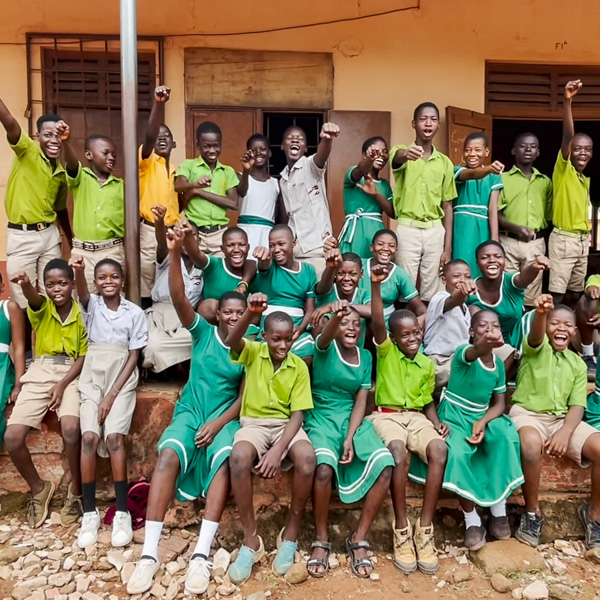
We are bringing together teenage girls from Tamale, Ghana and from around the world for five sessions over five weeks of honest conversation. This is not a course but a sisterhood circle – built on the belief that young women have something real to say to each other across every boundary that divides them.
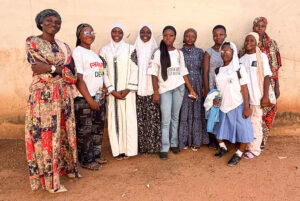
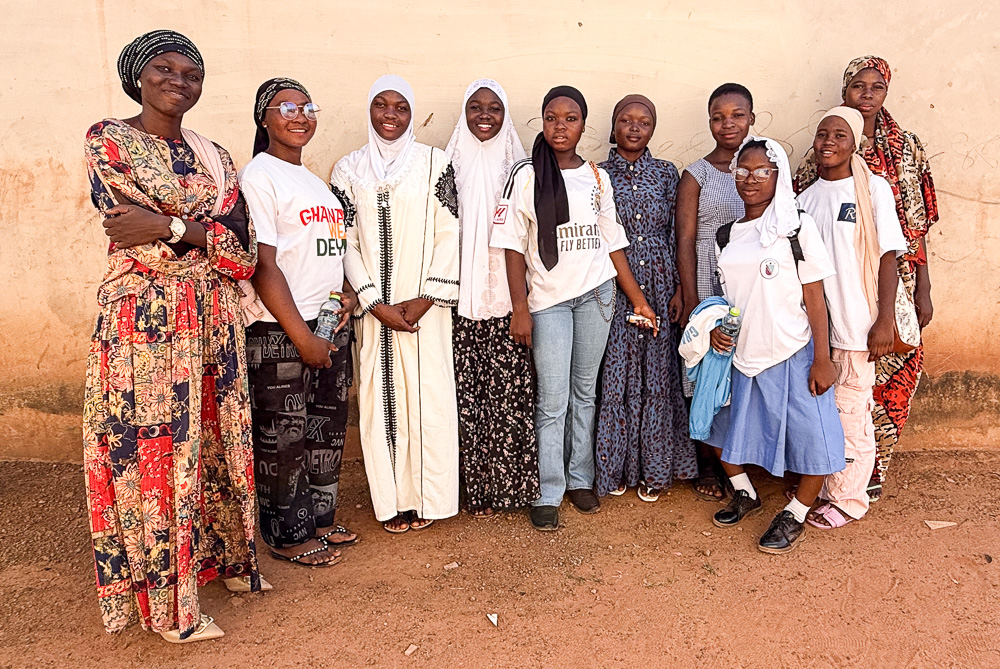
This program builds upon the SOMA in-person program run by the Hope Education Project in Tamale with young women transitioning from Junior to Senior High School. The program was facilitated by our Programs Director, Mariama Adam and is currently the subject of a research study by the University of Texas and Washington University Brown School.
Global development programmes treat girls in the Global South as recipients – of knowledge, of safety, of opportunity – and girls in wealthier countries as observers or donors. The exchange only goes one way.
SOMA Global Sisterhood Circle is built on a different premise entirely. Every girl in this circle has something the others do not. Every girl has a perspective shaped by a life that others have never lived. The point is not to educate across a divide but to close it with sisterhood.
Two Worlds – One Conversation
The circle connects two groups of young women whose daily realities look nothing alike – and who have more to say to each other because of it. This is not a lesson about life in Ghana or a window into another world. It is a genuine exchange – where a girl in Tamale changes how a girl in London, or Lahore, or Lagos thinks about her own life, and vice versa.
The sessions are facilitated by Zulfina Khudoyorova, our Youth Engagement Advisor who will manage the international participants and Mariama Adam, who will be managing the participants in Tamale.
TAMALE, NORTHERN GHANA
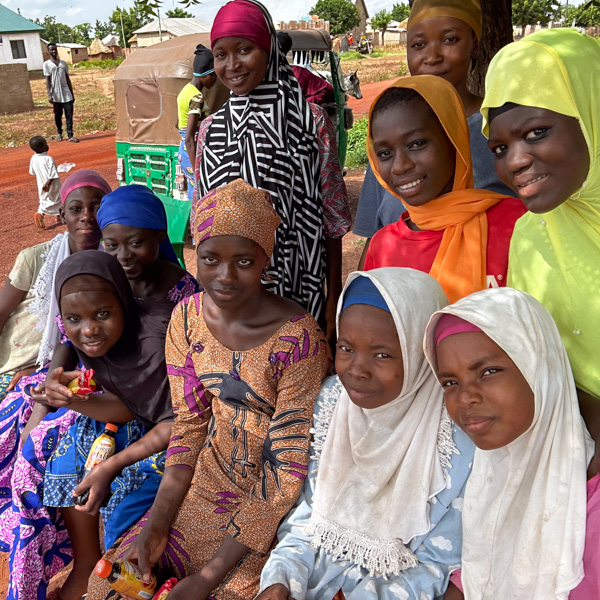
Girls navigating the transition from junior to senior high school in a predominantly Islamic, Dagomba community. Negotiating expectations around family, marriage, and economic pressure – while figuring out who they want to become.
INTERNATIONAL COHORT
Girls from anywhere in the world – with their own pressures, their own contexts, their own questions about identity, belonging, and the future. Brought in not to observe, but to participate as equals.
Who we are looking for
Four places are available in the international cohort. We are looking for young women who:
- Are between 14 and 17 years old
- Can commit to all five sessions – the sisterhood only works with the same people throughout
- Are genuinely curious about a life that looks different from their own
- Are willing to share something honest about their own experience, not just listen
- Have a parent or guardian who supports their participation
- Have access to a device with a camera and a reliable internet connection
You do not need to be an activist. You do not need to have travelled or have international experience. You do not need to be outgoing or confident already. You just need to be willing to commit for five weeks and bring an open mind!
THIS IS NOT:
A charity or aid programme
A one-way cultural showcase
A course with a curriculum
Open-ended or ongoing
About rescuing or helping anyone
THIS IS:
A feminist, peer-led exchange
Mutual learning in both directions
Five weeks with a clear, deliberate ending
Small, intentional and real
About every girl in the circle equally
How we keep the circle safe
The circle is led by two experienced female facilitators: Mariama Adam in Tamale and Zulfina Khudoyorova internationally. Safety is not a policy layer on top of the programme. It is designed into how the circle works from the start.
Safeguarding Principles
• Documented parental or guardian consent required before any girl joins
• Female facilitation throughout – on both sides of the call
• No screen recording. No screenshots. Stories shared in the circle stay in the circle.
• No exchange of personal contact details or social media handles
• Named safeguarding contacts in place before the first session

SOMA Global Sisterhood Circle – Join Us


Porta Potty Nigeria: Survivor Testimony from the UAE

Displacement and Trafficking Risk in Northern Ghana