
QNet in Ghana: The Promise, The Reality, and The New BBC Investigation
For years, the name “QNet” has sparked heated debate across West Africa. To some, it is presented as a life-changing business opportunity; to others, it is synonymous with sophisticated fraud. This week, a new BBC Africa Eye documentary has brought the issue back into the global spotlight, coinciding with massive police raids targeting QNet in Ghana operations.
If you are researching this topic, it is vital to understand the disconnect between what the corporate entity claims and the devastating reality facing hundreds of young people in the Ashanti and Northern regions right now.
The BBC Investigation: A Father’s Search
The newly released BBC documentary, “Hunting the Traffickers: Scammers trading on the QNet brand,” follows the heart-wrenching story of Foday Musa. Musa’s two children were recruited from their village in Guinea with promises of jobs abroad. After his family paid $25,000 to “recruiters,” the jobs never materialized.
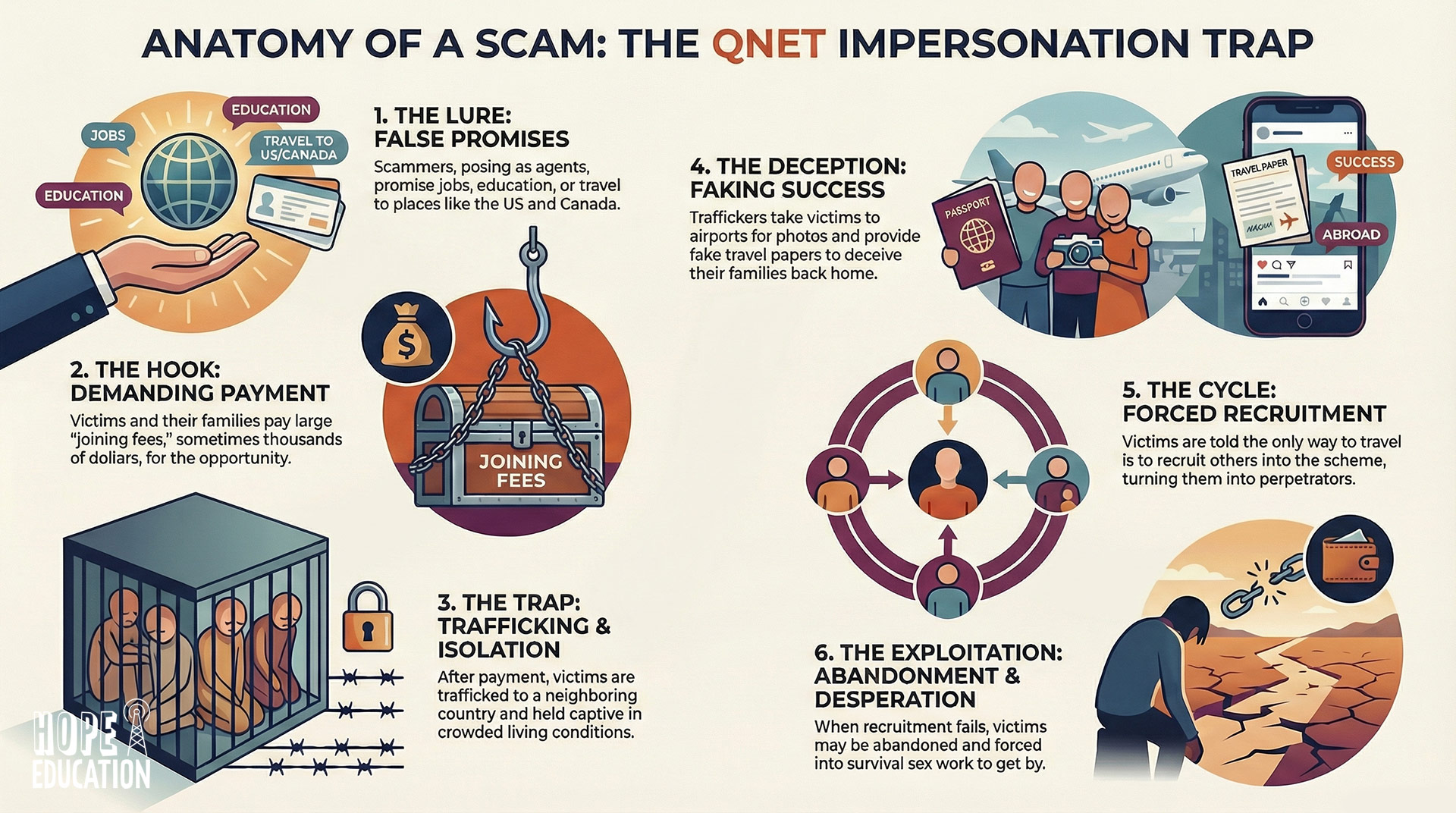
Instead, the BBC investigation reveals a brutal cycle: victims pay large sums for “administration costs” or products, are moved across borders, and are held captive. They are then told they can only travel or earn money if they recruit others into the scheme.
Watch the BBC News Africa documentary
The Reality on the Ground: EOCO’s Largest Raid
The events depicted in the BBC documentary are not isolated to Sierra Leone or Guinea; they mirror a crisis unfolding right now in Ghana.
Just recently, the Economic and Organised Crime Office (EOCO) in Ghana conducted a massive operation, arresting 320 persons in what they described as the “largest QNet fraud raid” in the country. According to Dominic Mensah, head of the anti-human trafficking unit at EOCO, victims were recruited primarily from the Northern part of Ghana and camped in separate locations in the Ashanti region, specifically within the Kwabre East municipality.
These victims were lured under the pretext of job, educational, and travel opportunities. However, upon arrival, they were told those agreements “didn’t exist anymore” and were forced to engage in QNet business instead.
Mensah noted a disturbing psychological element to the scam: many victims have been “indoctrinated” to believe they are on the path to success, making them resistant to rescue efforts.
The International Dimension: Ghanaians Detained Abroad
The QNet in Ghana crisis is not just domestic; it is a cross-border security issue. Samuel Okudzeto Ablakwa, a Member of Parliament and Ranking Member on Foreign Affairs, recently briefed Parliament on the detention of Ghanaians in neighboring Côte d’Ivoire.
According to Ablakwa, 20 Ghanaians are currently detained in Abidjan, identified as perpetrators within a “QNET fraudulent syndicate”. These arrests were part of a larger group of 60 Ghanaians involved in QNet-related cases, 40 of whom were identified as victims and released. This highlights the complex nature of the scheme, where today’s victims often become tomorrow’s recruiters to recoup their losses.
How the QNet in Ghana Scam Works
Based on the testimonies from the BBC, GhanaWeb, and local police reports, the modus operandi is consistent and dangerous. Be wary if you encounter these red flags:
- The “Travel” Hook: Recruiters promise high-paying jobs or visas for the US, Canada, or Europe.
- The Upfront Payment: Victims are asked to pay exorbitant fees—often thousands of dollars—supposedly for registration or travel documents.
- The Bait and Switch: Once the money is paid, the job disappears. Victims are often housed in crowded “camps,” like those raided in Kumasi, and stripped of their resources.
- Forced Recruitment: To survive or recover their money, victims are forced to lure friends and family into the same scheme.
QNet’s Official Stance: “We Do Not Sell Jobs”
It is crucial to distinguish between the “independent representatives” (IRs) committing these crimes and the official QNet corporate policy. QNet explicitly denies involvement in these illegal activities. In response to the EOCO raids, Jodosia Nana Corte, QNet’s head of compliance, stated it is “heartbreaking” to see young lives hanging in the balance because they “believed in something that is not true”.
QNet has issued a strict “scam notice” clarifying their business model:
- No Jobs for Sale: QNet states they never offer employment in exchange for payment. If you are asked to pay for an interview or job, it is a scam.
- No Visas: The company does not facilitate overseas travel or visas.
- Not an Investment: They assert they are a direct-selling company, not an investment scheme offering “get-rich-quick” returns.
Conclusion: How to Protect Yourself
The gap between QNet’s corporate policy and the actions of rogue agents in Ghana is vast. While the company blames unauthorized agents, authorities like EOCO are treating these operations as major human trafficking syndicates.
If you or a family member are approached about a QNet in Ghana opportunity, exercise extreme caution. Remember the warning from the Minister of Foreign Affairs: border authorities are on high alert to prevent unsuspecting travelers from being lured into this scheme. Do not pay money for a job offer. If you suspect you are dealing with a fraudulent agent, QNet advises reporting the incident immediately to their hotline at network.integrity@qnet.net