How Porta Potty Nigeria Survivors Describe It: Lived Experience Testimony
Across 30 qualitative interviews with Nigerian women trafficked to the UAE, the practice of forcing women to engage with human excrement during sexual encounters emerged as one of the most consistently reported forms of abuse. It did not surface in every interview. But where it did, the accounts were consistent – in their detail, in their identification of Arab men, and in their description of the lasting damage.
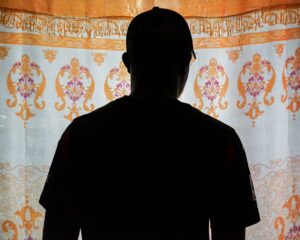
Some women were able to speak about it with painful clarity. One survivor – I will call her Gloria – described the experience in terms that have stayed with me since I conducted her interview. She spoke about what it is to be forced to do something to another person’s body that she had never imagined one human being could ask of another. She described three men simultaneously. She asked, rhetorically, whether anything could remain alive inside a person after that. The answer she gave herself was that it could not.
Another survivor, Rachel, told me that this was not something that developed gradually during her time in the UAE. It was her first assignment. Three men at a time. From day one. She told me she had no choice – that if she refused, she would be beaten.
Angela, when I asked her whether she had experienced this practice, confirmed that she had. A couple of times, she said. When I told her it must have been deeply distressing, she said one word: indescribable. She said nothing further. That word is itself a finding. These are women who have survived extreme violence, passport confiscation, debt bondage, and daily rape. The fact that this specific practice is the one they cannot speak about tells you something.
Sarah told me that years after returning to Nigeria she still has nightmares. She told me she would not wish what she experienced on her worst enemy. She described having no warning – no preparation, no possibility of mentally bracing herself. She said there was simply nothing. You just don’t know what to expect.
Frances described refusing the first time, and the punishment that followed – stripped naked and left in the compound yard. The second time, she told me, she agreed because she was afraid she was going to die.
Deborah confirmed it had happened to her, then could not continue. Margaret told me it happened to her twice. Pauline, one of the youngest women in this study, confirmed it happened during her four years in captivity in the UAE. Sarah told me that Arab men took too much pleasure from it – a phrase I have not been able to forget.
Not every woman in this study confirmed this experience. Some could not or would not speak about it. Safia told me it was something all the women held together talked about among themselves – a shared knowledge, even for those who had found ways to avoid it.
The Arab Men Pattern: A Consistent Finding Across Interviews
Every survivor who confirmed experience of this practice identified Arab men as the clients who demanded it. This consistency across independent interviews – conducted separately, over several months, with women who had no contact with each other during the research period – is significant.
A senior Nigerian anti-trafficking official with extensive operational experience investigating trafficking cases between Nigeria and the Gulf states confirmed this pattern when I interviewed him. In his assessment, this is an Arab pattern. He said so without hesitation. In every case reported to him by victims, the perpetrators were Arab men.
He also raised a caveat that I want to address directly. Some of the women in this study had limited ability to distinguish between Arab men and men of other nationalities. This is a fair challenge to the finding. However, the women consistently described their clients’ dress, their manner, and the language they spoke – details that point clearly to Arab Gulf identity. Pauline described the men as white Arabs, a term some Nigerian women use to describe lighter-skinned Arab men. Rachel was assigned specifically to Arab male clients. Joy’s response when I asked her about the men she was forced to see was a visceral refusal to remember – she said if this is not hell, she does not know what is.
This finding does not implicate all Arab men. It identifies a specific demand pattern associated with Arab male clients within the UAE trafficking context. That pattern is consistent, corroborated, and demands serious attention.
Coercion, Violence and the Absence of Choice
One of the most important things to understand about porta potty exploitation in the Nigerian trafficking context is that choice plays no part in it. The media narrative has often framed porta potty as something women do for money – an extreme transaction, repulsive but voluntary. The testimony I have collected is unambiguous. These women did not choose this. They were forced.
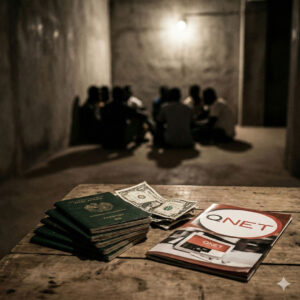
The mechanisms of force were varied. Physical beatings. Threats. Confinement. Debt bondage. Spiritual coercion through juju. The constant threat of deportation. When women refused, they were punished severely.
Frances was stripped and left naked in the compound yard. Rachel was told she would be beaten. Angela was given cocaine before the encounters – a detail that points to deliberate chemical coercion, not simply individual client behaviour. Several other women described being given drugs or alcohol before being taken to clients, without explanation.
Gloria described her situation with a clarity that I found both devastating and precise. She told me she had run away from abuse in Nigeria to find something better. In Dubai, she found the same thing – in a different country, with no way out. She told me she had no choice but to be strong. That phrase – no choice but to be strong – is one I have heard in different forms from almost every woman I have interviewed in this study.
The absence of choice is not incidental to this practice. Based on what survivors have told me, it appears to be part of its appeal to the men who demand it.
The Hidden Layer: Exploitation for Pornographic Content
One dimension of this practice that has received almost no attention in public reporting emerged clearly in my interview with the senior anti-trafficking official. In his assessment, the filming of these acts for commercial pornographic content is not rare. He described it as an arrangement between Arab men and traffickers – content produced for explicit platforms and sold. He estimated such content to be very expensive.
The women involved had no knowledge they were being recorded. He was emphatic about this.
This creates a layer of harm that compounds everything else. Women who have returned to Nigeria, rebuilt their lives, and tried to move forward may have images of the worst moments of their exploitation circulating online permanently. They have no access to those images. They have no way to remove them. They may not even know they exist.
This sits at the intersection of trafficking, sexual exploitation, and image-based abuse. It demands a specific legal and policy response. That response does not yet exist in either Nigeria or the UAE.
The Psychological Aftermath: What Stays With You
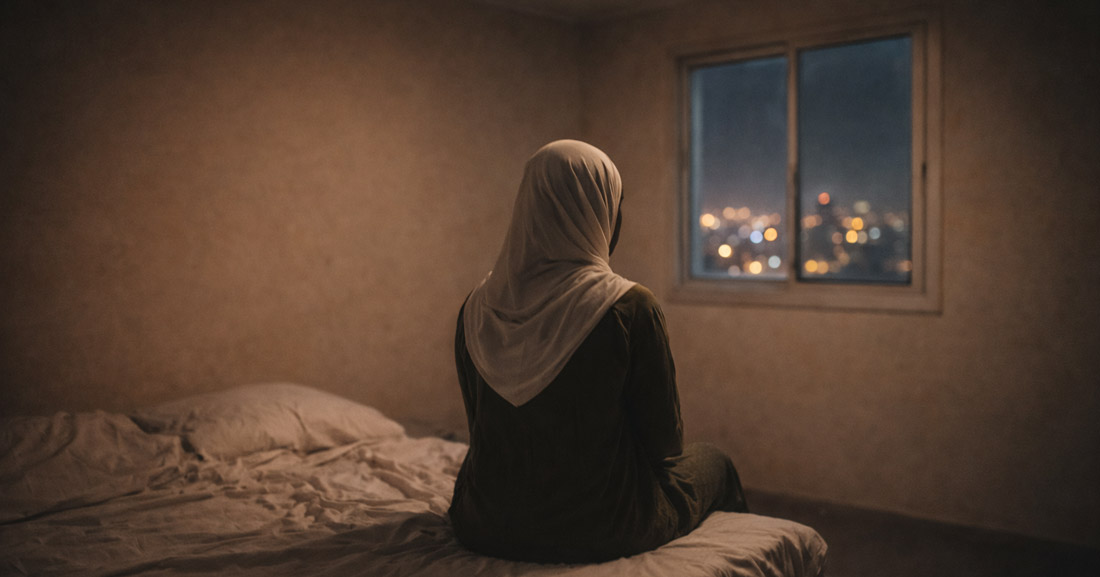
I have conducted more than 30 of these interviews. By the end of each one, I am – as I told one of the women I spoke to – almost ashamed to be a man. But it is the accounts of this specific practice that have affected me most as a researcher. Not because the other abuses these women suffered were less serious. They were not. It is because the women themselves consistently identify porta potty exploitation as the experience that did the deepest damage – the one they cannot speak about, cannot recover from, cannot file away.
Gloria told me that something had been killed inside her. She said she can no longer feel anything. She described this not as sadness but as an absence – the place where a person used to be. She told me she can talk to me the way she does precisely because she has stopped feeling. That is not recovery. That is what happens when a person has no other way to survive.
Sarah still has nightmares years after returning to Nigeria. She told me that the worst part was the absence of any warning. If she had known what was going to happen, she said, she could have prepared herself mentally. But there was nothing. You just don’t know what to expect.
Angela said one word and stopped. Indescribable. I have not found a better description.
Patricia required surgery after returning to Nigeria – physical injuries from the abuse she suffered in the UAE that needed medical treatment she could not afford. The physical and psychological consequences of this practice are severe, lasting, and costly. They fall entirely on the women.
What This Evidence Demands from Researchers and Policymakers
This is preliminary qualitative research. The sample is not statistically representative. What it presents is a consistent signal across multiple independent testimonies, corroborated by a senior official with direct operational knowledge, pointing to a specific, severe, and systematically under-documented form of sexual violence against Nigerian women in the UAE.
Several things follow from this evidence.
Research collaboration is needed. The Hope Education Project is calling for formal research partnerships with Nigerian anti-trafficking bodies, sexual health researchers, trauma specialists, and legal experts in image-based abuse. The scale of this practice among Nigerian women in the UAE is not yet documented at a population level. It needs to be.
The policy gap on digital exploitation is urgent. Women whose images are circulating online without their knowledge or consent have no current legal recourse in Nigeria or the UAE. This needs to change.
The demand side requires examination. The men who pay for this practice, and the trafficking networks that supply it, are the source of the harm. Interventions focused only on women’s vulnerability – without examining and challenging male demand – will not reduce it.
Survivor-centred support must account for this specific trauma. Standard counselling and reintegration support is not designed for the psychological aftermath of this form of abuse. Practitioners working with Nigerian returnees from the UAE need specific training and resources.
The Hope Education Project invites academic researchers, NGOs, legal specialists, and anti-trafficking practitioners to make contact. The women whose voices inform this research deserve more than a page on a website. They deserve a sustained, coordinated response.
The demand that drives exploitation in Dubai and across Gulf states does not emerge from nowhere. It is recruited, systematically, from source communities in northern Ghana, Nigeria, and across West Africa – young women who were promised domestic work and arrived to find something entirely different. Understanding what happens at destination is only half the picture. Hope Education Project works at source, in the communities in Tamale and northern Ghana where that recruitment begins, delivering the education that makes the next generation harder to deceive.
Frequently Asked Questions
What is porta potty in the context of Nigeria and Dubai? Porta potty is a term that originated on social media to describe a practice in which wealthy men – predominantly in the UAE – coerce or pay women to participate in sexual acts involving human excrement. In Nigerian Pidgin English, survivors refer to this as “chopping shit.” Online coverage has largely treated this as a social media curiosity. Lived experience testimony collected by the Hope Education Project documents it as a severe form of sexual violence perpetrated against trafficked Nigerian women – not a transaction between consenting adults.
Who are the perpetrators of porta potty exploitation in the UAE? In every case documented in this study where a survivor confirmed experience of this practice, she identified Arab men as the perpetrators. This finding is consistent across independent interviews conducted over several months. A senior Nigerian anti-trafficking official with direct operational experience of UAE cases corroborated the pattern independently. This does not implicate all Arab men. It identifies a specific demand pattern associated with Arab male clients within the UAE trafficking context.
Are Nigerian women forced into porta potty practices or do they choose it? The testimony in this study is unambiguous. None of the women who described this practice did so as an act of choice. All described coercion – through physical violence, threats, confinement, debt bondage, or chemical means including cocaine. Women who refused were beaten, stripped, or threatened with death. The framing of porta potty exploitation as a transactional choice made by women for money is not supported by survivor testimony. It reflects a narrative that serves the interests of perpetrators.
What is the psychological impact of porta potty exploitation on survivors? Survivors in this study consistently identified porta potty exploitation as the experience that caused the deepest and most lasting psychological harm – more so than rape, physical violence, or confinement. Multiple women described an inability to feel anything afterwards. Others reported ongoing nightmares years after returning to Nigeria. Several could not speak about it at all. One woman’s response, when asked to describe the experience, was a single word: indescribable.
Is porta potty exploitation connected to online pornography? Based on testimony from a senior anti-trafficking official with direct experience of UAE cases, the filming of these acts for commercial pornographic content appears to occur in some cases – without the women’s knowledge or consent. The women involved are unaware they have been recorded. This creates a form of ongoing digital violation for which no legal recourse currently exists in Nigeria or the UAE. The Hope Education Project is calling for urgent policy attention to this dimension of the harm.
What is the Hope Education Project doing about porta potty exploitation? The Hope Education Project is conducting an ongoing qualitative research study into the experiences of Nigerian women trafficked to the UAE, of which this lived experience reporting forms a part. A full research paper is in preparation. The organisation is calling for formal research collaborations with anti-trafficking bodies, sexual health researchers, trauma specialists, and legal experts. Contact us here.
All interviews were conducted under informed consent with full ethical safeguarding protocols in place. Survivor names used throughout this research are pseudonyms. A full research paper drawing on this interview dataset is in preparation for publication.