The displacement picture in Northern Ghana is more complex than a single UNHCR dashboard can capture, and that complexity matters directly for HEP’s work.
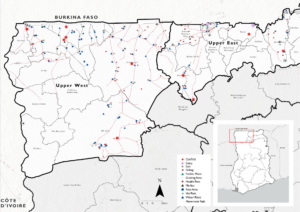
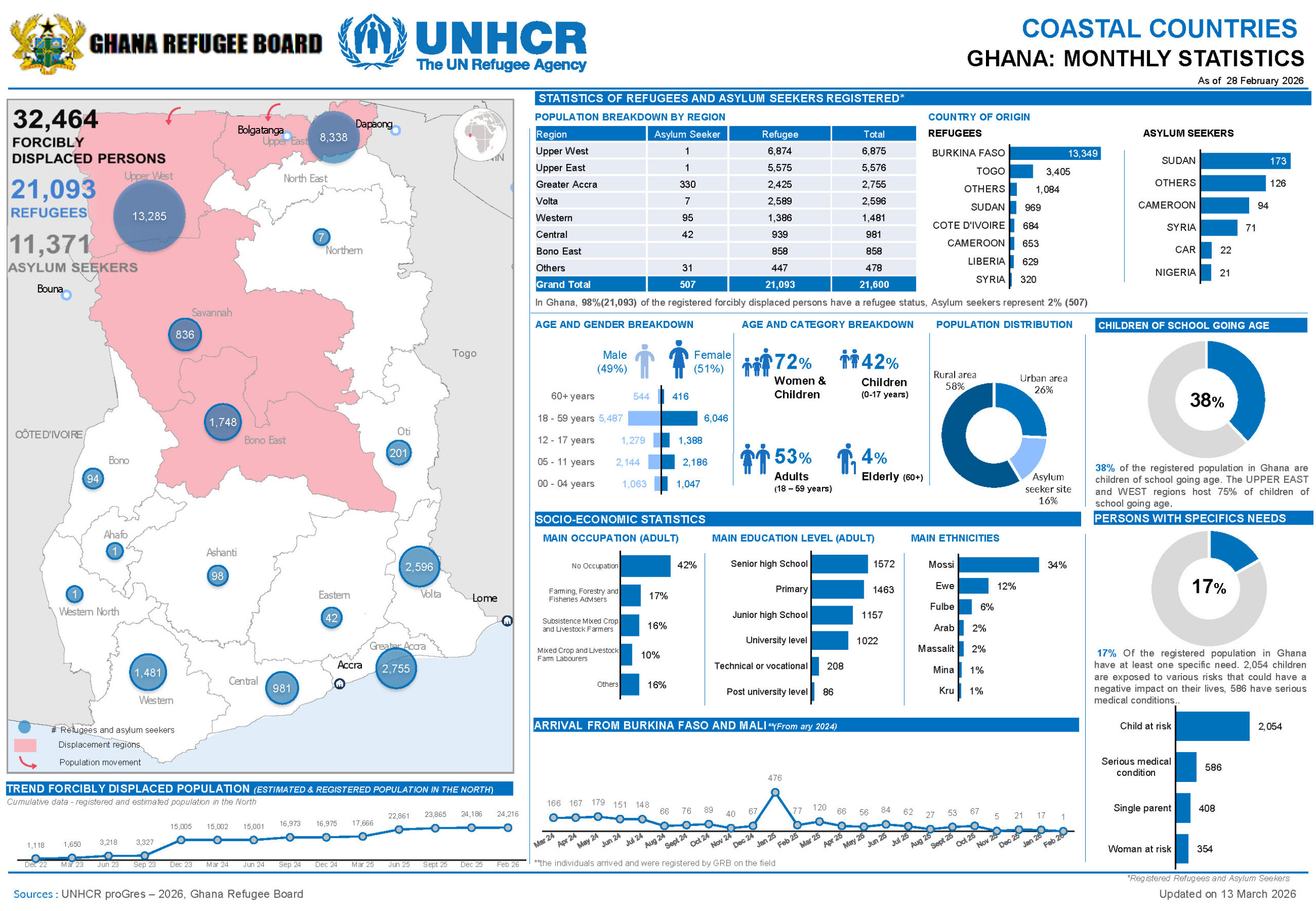
The February 2026 UNHCR statistics record 32,464 forcibly displaced persons registered in Ghana, with the vast majority concentrated in the Upper West and Upper East regions. Most are arriving from Burkina Faso and Mali, driven by Sahelian conflict and jihadist violence that has been pushing people south for several years. UNHCR has formally welcomed Ghana’s decision to grant prima facie refugee status to displaced Burkinabes – a significant policy step that reflects both the scale of arrivals and the speed at which they have been coming.
But the picture has a layer that is less commonly reported. Conflict in Bawku and other northern communities has created a situation where some Ghanaian citizens themselves are now seeking safety across borders into Togo and Burkina Faso – a historic reversal for a country that has long served as a regional haven. Civil society groups have described this as a national tragedy, pointing to violent conflict across the Upper East, Oti, and Northern regions as evidence of governance failure. Meanwhile, the Bawku conflict – rooted in a long-running dispute between the Kusasi and Mamprusi communities over chieftaincy, land, and political influence – is still in active mediation, with the Asantehene presenting findings to the President.
What this means in practice is that the communities HEP works with in and around Tamale are navigating multiple simultaneous pressures: incoming displaced populations from the Sahel, internal ethnic conflict in the Upper East, and the underlying poverty and gender inequality that have always driven trafficking vulnerability in this region. For young people growing up here, the risk calculus around migration and exploitation is not abstract. It is immediate and personal.
This is why prevention education – delivered in schools and communities before crisis decisions are made – is not a secondary concern. It is the primary one.